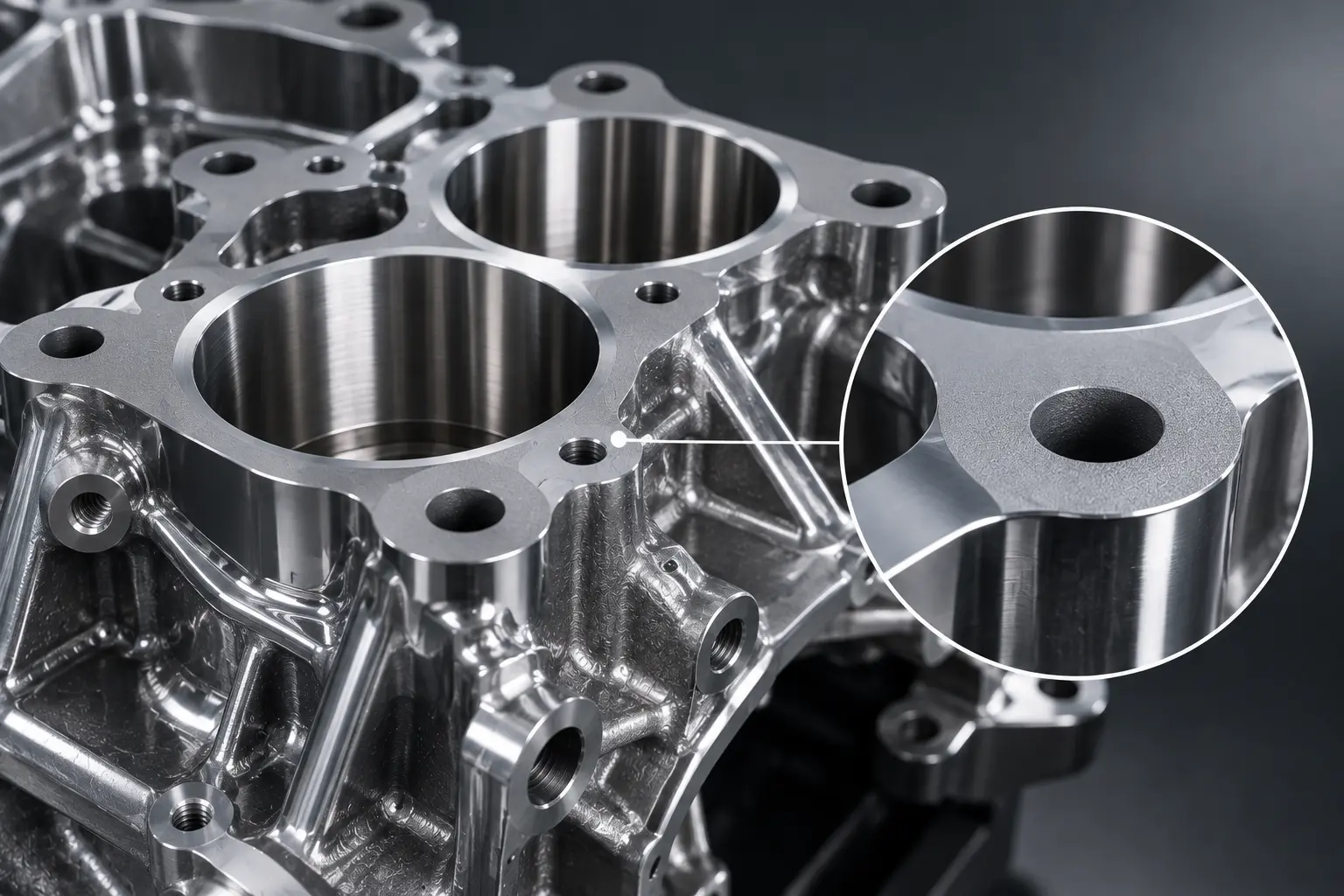
Laser Surface Treatment of Castings
Laser surface treatment provides a precise and controlled solution for critical areas of cast components. The technology enables selective cleaning, activation, texturing, and preparation of sealing, bonding, or coating surfaces without mechanical contact. Precisely adjustable laser parameters ensure repeatable results while minimizing impact on the base material. The process is ideal for engine housings, transmission components, structural castings, and other complex parts. Fully automated integration makes it suitable for modern high-volume production lines.
Request testWhy Is Laser Surface Treatment Useful for Castings?

Precise Treatment of Functional Surfaces
↻Precise Treatment of Functional Surfaces
Cast components often contain critical functional areas such as sealing faces, contact surfaces, bearing seats, and joining zones. Laser technology allows these areas to be treated selectively without affecting the entire component. The process can be precisely adapted to the geometry and surface requirements of each part.
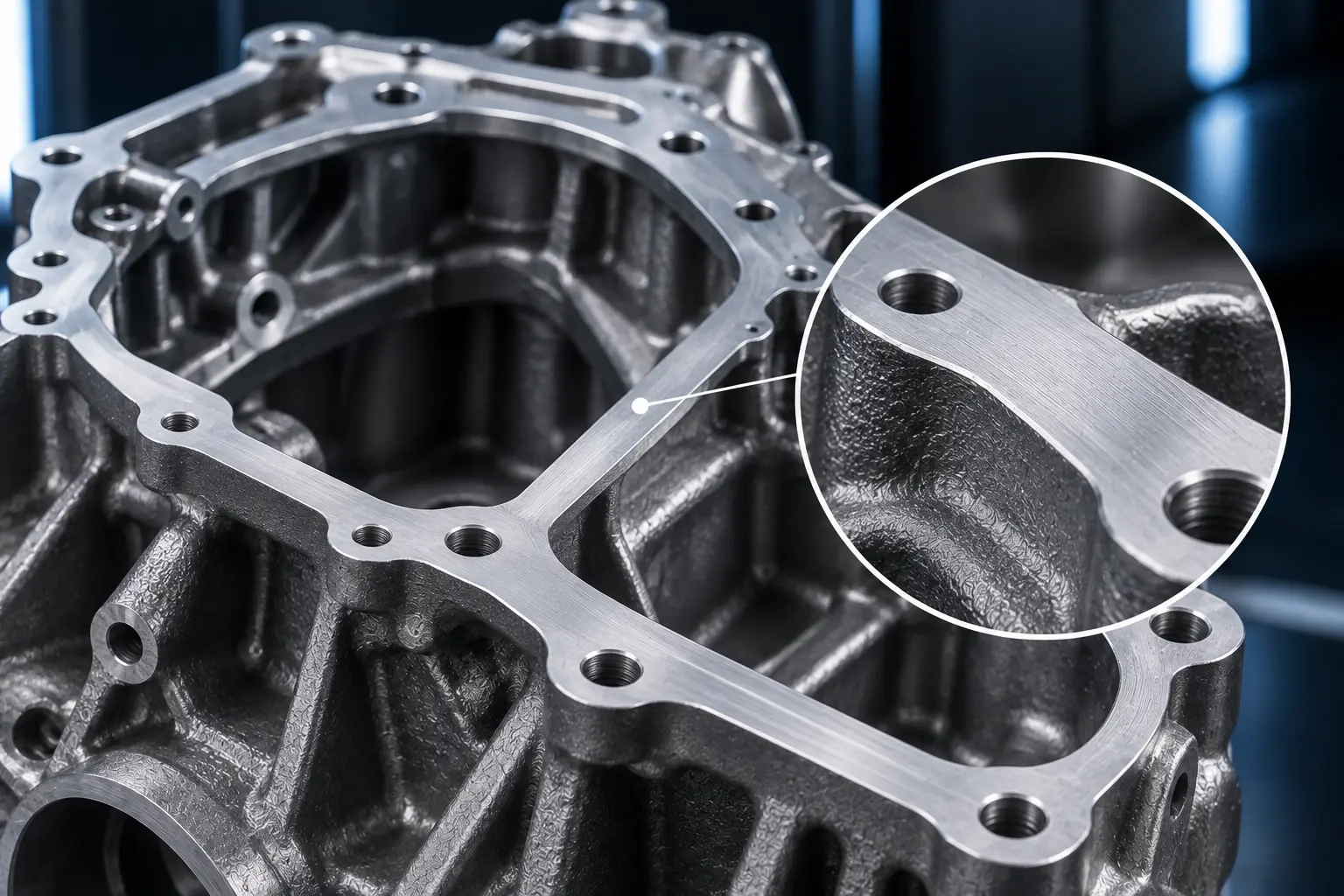
Preparation of Sealing Surfaces
↻Preparation of Sealing Surfaces
The quality of sealing surfaces has a direct impact on the reliability of assembled components such as engine and transmission housings. Laser treatment can selectively remove oxides, residues, oils, and other contaminants from these critical areas. This creates a controlled and repeatable surface condition for subsequent assembly and sealing processes.
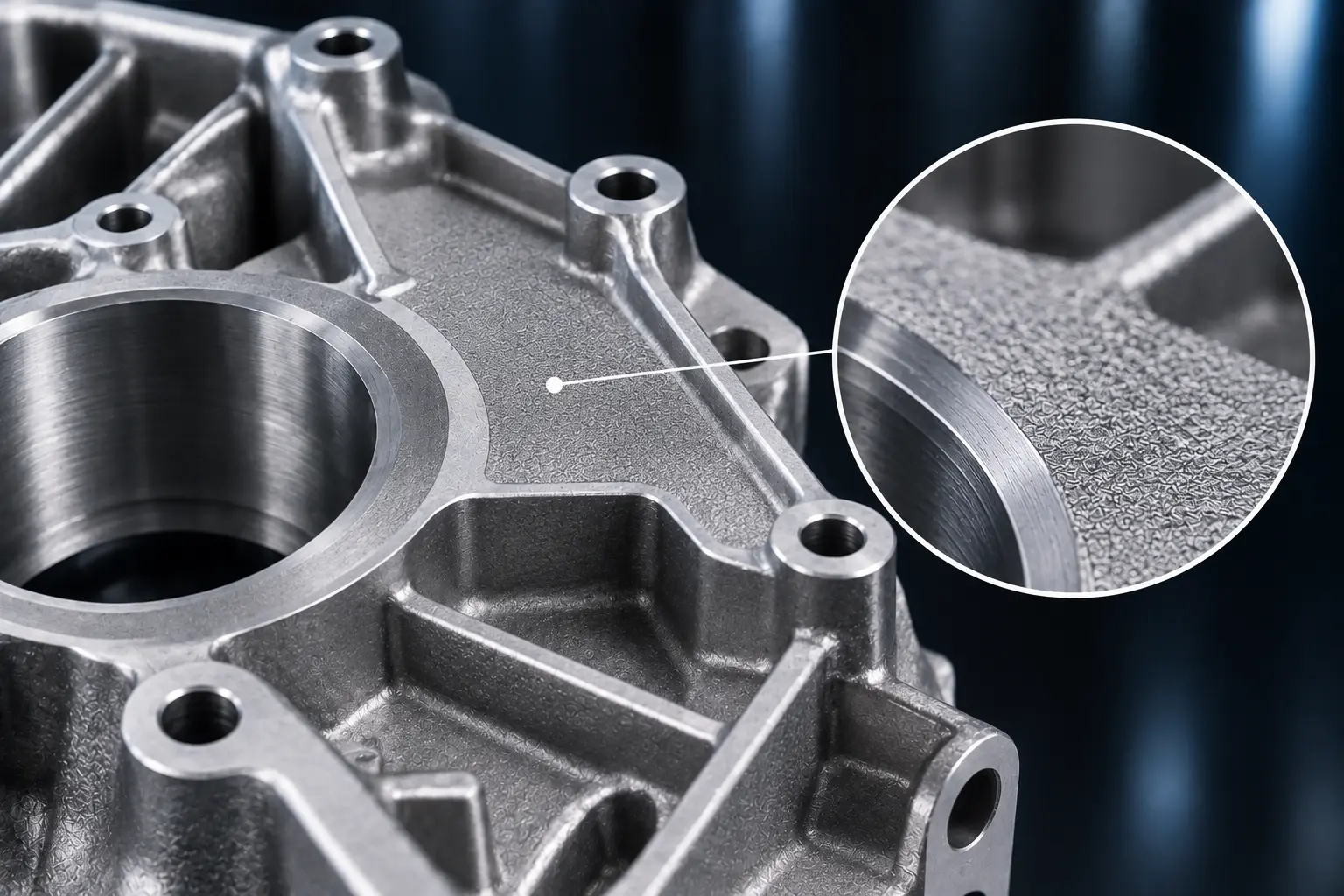
Improved Adhesion for Coating and Bonding
↻Improved Adhesion for Coating and Bonding
Cast surfaces often require preparation before coating, adhesive bonding, or other joining processes. Laser treatment can clean and activate the surface while creating a defined microstructure that supports improved adhesion. The process can be adjusted to achieve different surface characteristics depending on the material and application.
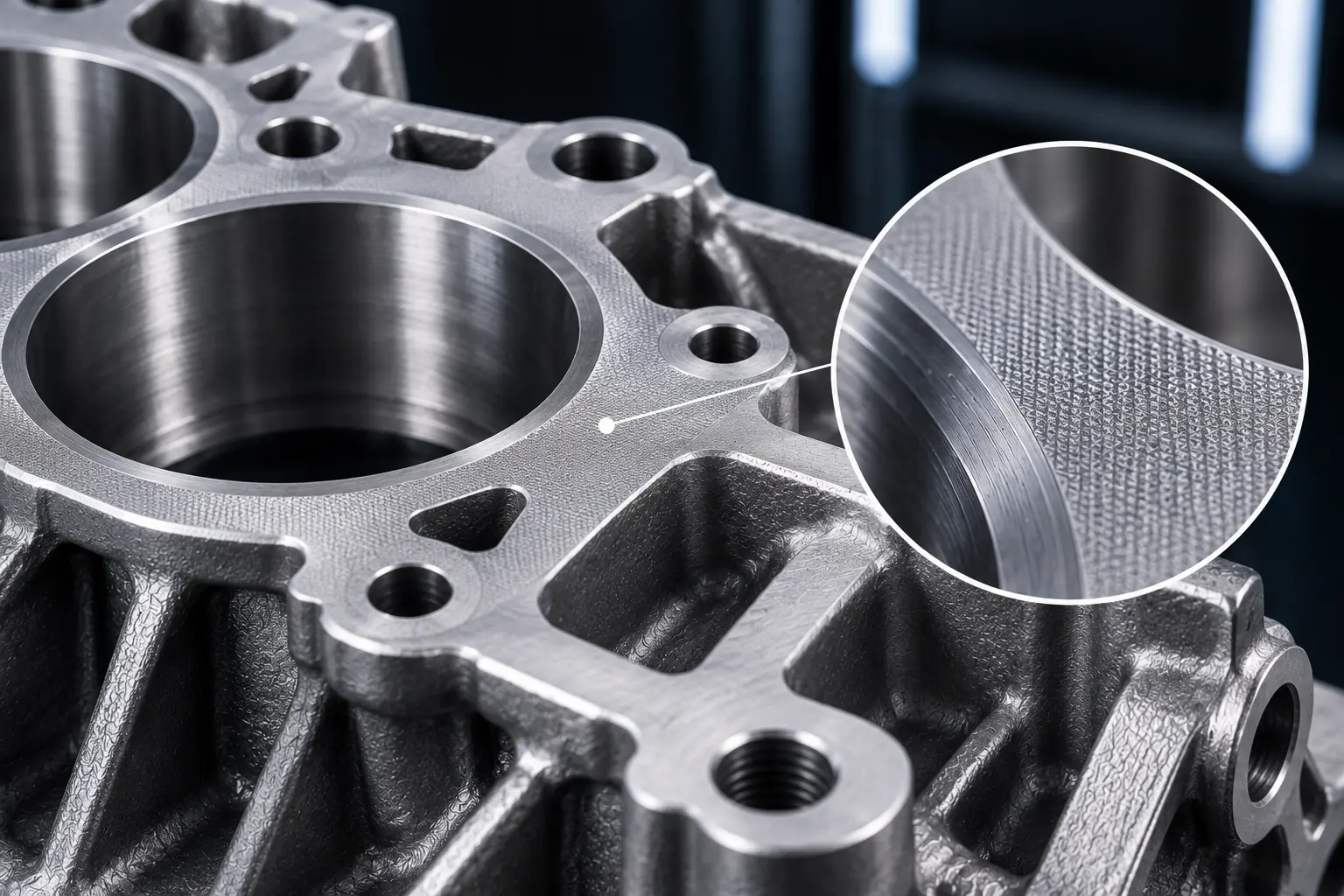
Controlled Surface Texturing
↻Controlled Surface Texturing
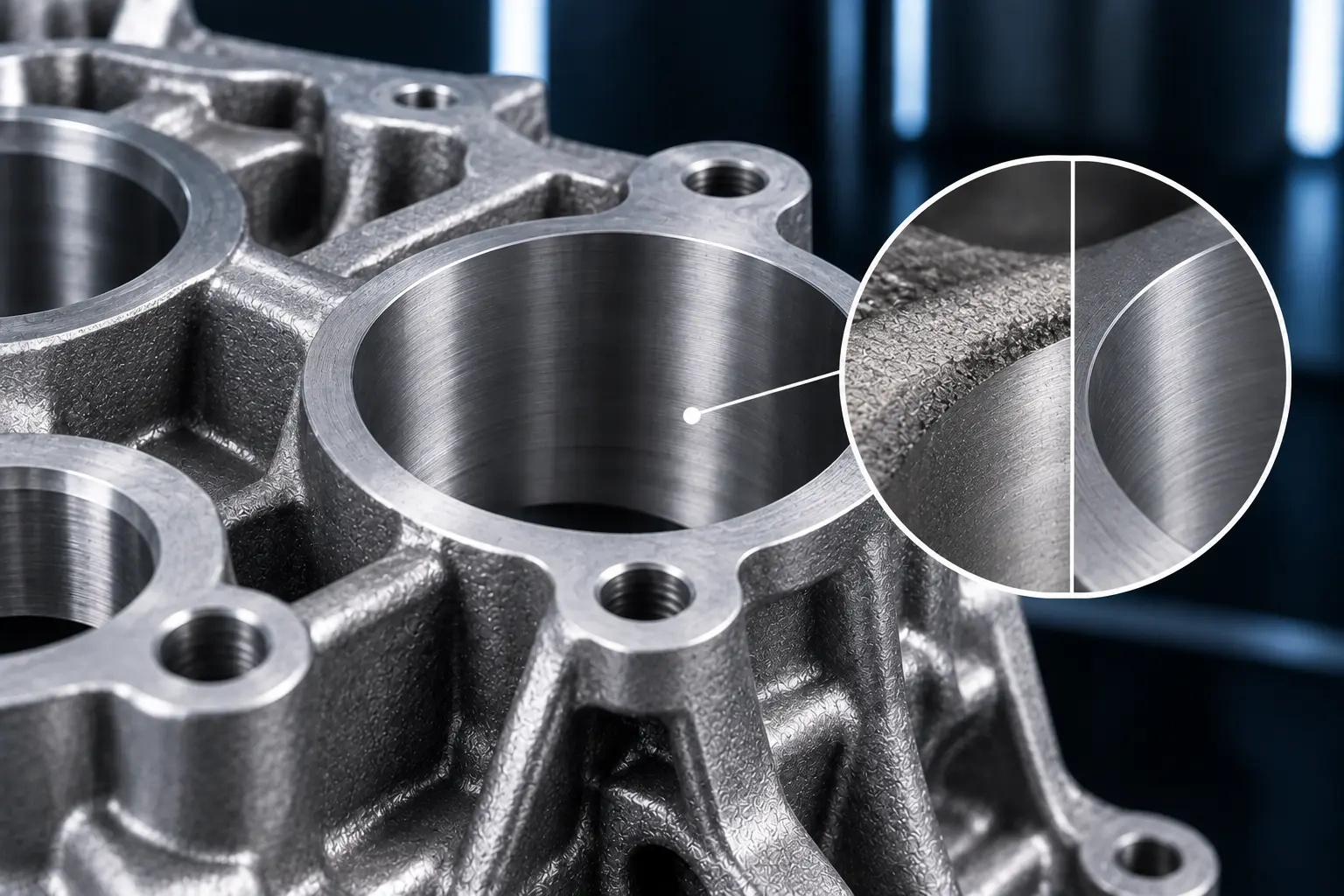
Laser technology can create precisely defined microstructures on selected areas of a casting. These structures can modify surface properties such as friction, adhesion, or lubricant retention depending on the application. Because the laser parameters are digitally controlled, the same surface structure can be reproduced consistently across large production volumes.
Minimal Impact on the Base Material
↻Minimal Impact on the Base Material
Laser surface treatment is a non-contact process, meaning there is no mechanical tool directly acting on the casting. The energy input can be precisely controlled and concentrated only on the required surface area. This makes it possible to treat sensitive or geometrically complex components while minimizing unnecessary impact on surrounding areas.
High Repeatability in Serial Production
↻High Repeatability in Serial Production
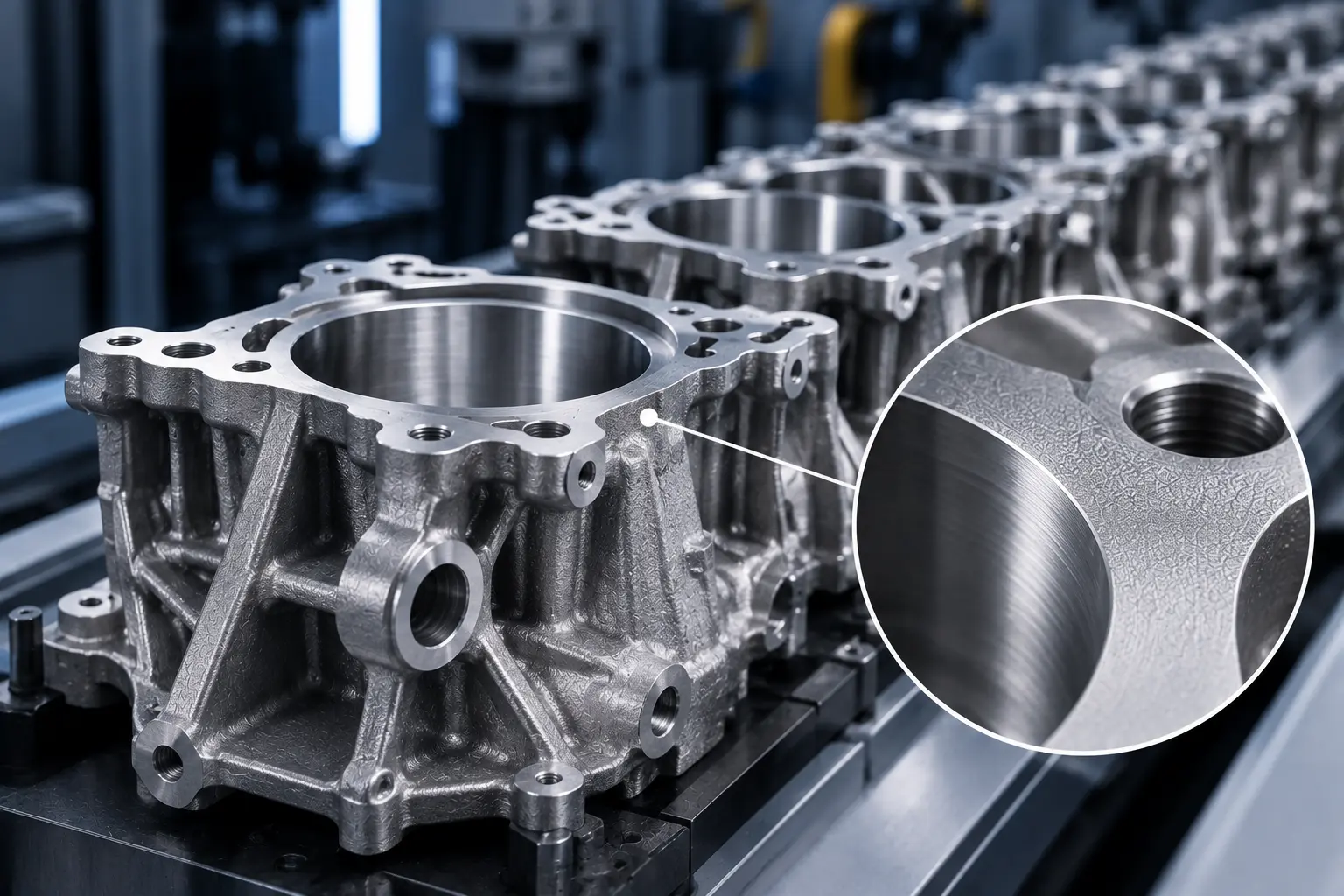
Once the optimal laser parameters have been established, they can be stored and reproduced for every component. This provides consistent surface quality and reduces variation associated with manual processing. Process parameters can also be monitored and documented, supporting modern quality-control and traceability requirements.
Easy Integration into Automated Production
↻Easy Integration into Automated Production
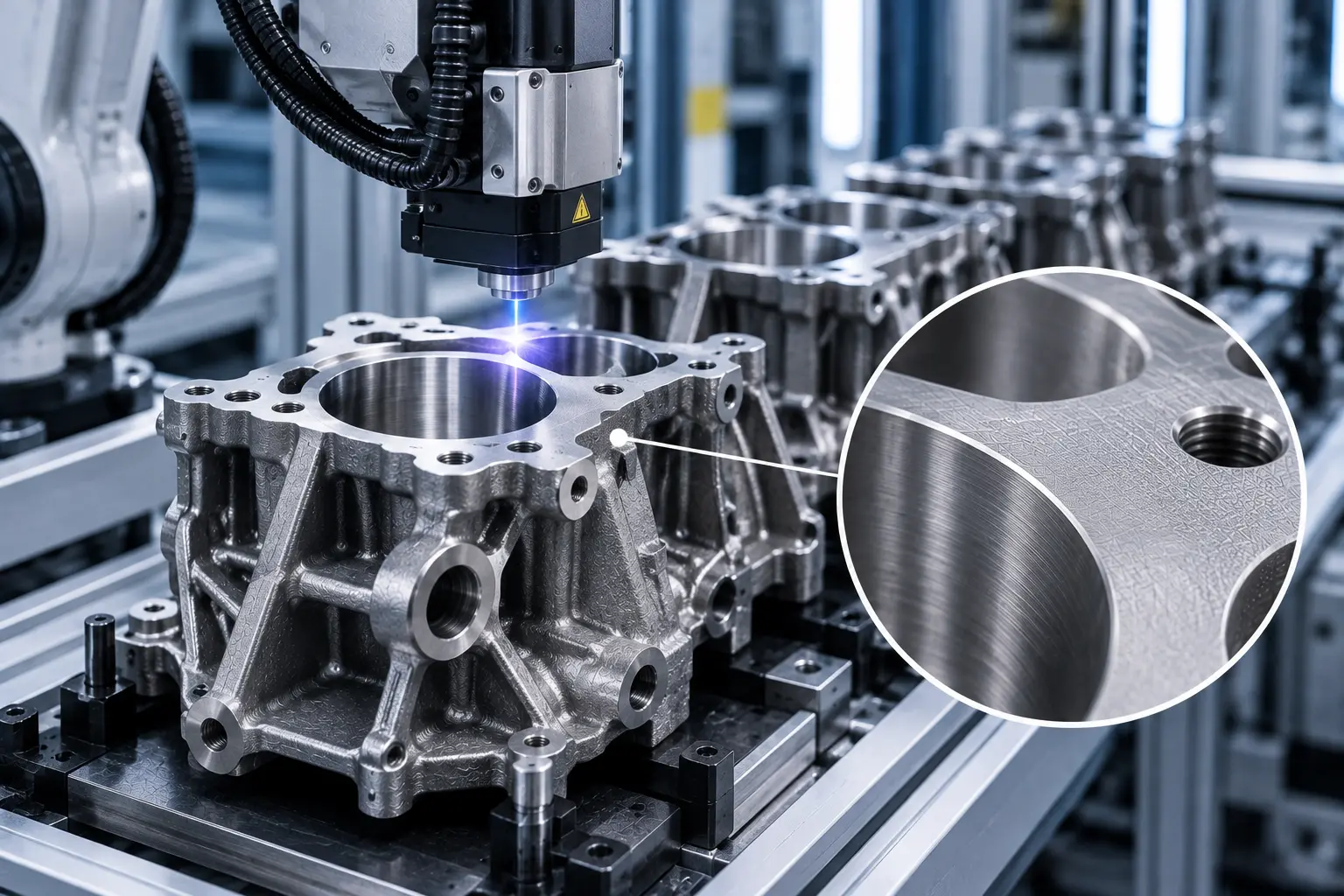
Laser surface treatment can be integrated into robotic cells, automated workstations, or directly into existing production lines. Cast components can be positioned, treated, inspected, and transferred to the next manufacturing step automatically. This makes the technology particularly suitable for automotive and other high-volume industrial production environments.
Laser Surface Treatment of Castings vs. Conventional Surface Processing
More InformationSelective surface treatment exactly where the manufacturing process requires it.
FibeerSX laser surface treatment combines up to 14,000 mm/s scanning speed, ±0.01 mm positioning precision and digitally programmable treatment geometries. Unlike conventional mechanical processes, the laser can treat only the defined functional area and reproduce the same process through stored digital recipes. With scanner-based processing, treatment patterns can also be generated without physical movement of a mechanical tool across the surface.
| Aspect | Laser Surface Treatment FibeerSX Laser Technology | Abrasive Blasting Particle-Based Processing | Grinding / Abrasion Mechanical Material Removal | Brushing Mechanical Brush Processing |
|---|---|---|---|---|
| Maximum Scan Speed | Up to 14,000 mm/s maximum scanner speed; actual process speed depends on application | No laser scanning | Feed / tool-speed dependent | Feed / brush-speed dependent |
| Positioning Precision | ±0.01 mm positioning precision of the laser system | No beam-positioning equivalent | Machine and tool dependent | Machine / robot and brush dependent |
| Laser Source Lifetime | Up to 100,000 h laser source operating lifetime | Abrasive media consumed during operation | Grinding tools require replacement | Brushes require replacement |
| Process Type | ✓ Non-contact | Abrasive particle impact | Mechanical contact | Mechanical contact |
| Selective Area Treatment |
✓ Only the Defined Area
Digital treatment geometry can be positioned on the required functional surface
|
△ Masking may be required | Possible, but tool geometry and accessibility limit the area | Possible, but brush width and accessibility limit precision |
| Physical Tool Movement |
0 mm Tool Travel
within the optical scan field, the beam is positioned by the scanner without moving a mechanical tool across the surface
|
No cutting tool, but nozzle / workpiece positioning may be required | Mechanical tool movement required | Mechanical brush movement required |
| Mechanical Contact | ✓ None | Particle impact | Direct tool contact | Direct brush contact |
| Mechanical Load on Casting | ✓ No direct mechanical force | Repeated abrasive impact | Grinding force applied | Brush contact force applied |
| Treatment Geometry | ✓ Digitally programmable | Defined by nozzle, masking and blasting angle | Tool-path dependent | Brush-path dependent |
| Geometry Change | ✓ Software based treatment pattern can be modified digitally | Masking / setup may need modification | Tool path and setup modification | Tool path / brush setup modification |
| Surface Texturing | ✓ Digitally controlled parameter-dependent microstructure generation | Primarily determined by abrasive media and pressure | Determined by abrasive tool and machining parameters | Determined by brush and process parameters |
| Material Removal | ✓ Precisely controllable selective removal / modification depending on process recipe | Abrasive removal | Mechanical material removal | Mechanical surface abrasion |
| Tool Wear | ✓ No mechanical tool wear | No cutting tool, but media / nozzle wear occurs | — Grinding-tool wear | — Brush wear |
| Process Consumables | ✓ No abrasive media | Blasting media required | Grinding wheels / belts / discs | Replaceable brushes |
| Masking Requirement | ✓ Often unnecessary selective treatment defined digitally | Often required for selective areas | Generally not required, but access must be controlled | Generally not required |
| Repeatability | ✓ High digitally stored parameters and treatment geometry | Media, pressure and nozzle condition dependent | Tool wear and machine condition dependent | Brush wear and contact-force dependent |
| Process Recipe Storage | ✓ Digital recipes | Process settings can be stored in automated systems | CNC parameters can be stored | Robot / machine parameters can be stored |
| Automation Potential | ✓ Excellent | Good | Excellent with CNC / robotics | Excellent with robotics |
| Inline Integration | ✓ Directly integrable | Enclosed blasting station typically required | Mechanical processing station required | Mechanical brushing station required |
| Process Monitoring | ✓ Digital power, speed, frequency and recipe data can be monitored | Pressure / media-flow monitoring | Tool, force and machine monitoring | Force / speed / tool monitoring |
| Traceability | ✓ Recipe & process data | Additional data integration may be required | CNC / production-data integration possible | Robot / production-data integration possible |
| Complex Cast Geometries | ✓ High flexibility scanner and robotic positioning can be combined | Nozzle access and blasting angle must be considered | Limited by mechanical tool accessibility | Limited by brush accessibility |
| Small Functional Areas | ✓ Excellent localized sealing, bonding or coating zones | Masking may be required | Tool-size dependent | Brush-size dependent |
| High-Mix Production | ✓ Excellent product-specific digital recipes | Masking and setup dependent | Tooling and setup dependent | Brush and setup dependent |
| Best Suited For | Selective functional surfaces, sealing zones, bonding areas, coating preparation, controlled texturing and automated serial production | Larger-area cleaning, roughening and general surface preparation | Mechanical stock removal, flattening and accessible surfaces | Light cleaning, deburring and mechanical surface finishing |
Surface Treatment Comparison
Comparison of laser surface treatment with conventional surface preparation technologies for cast components.
| Aspect |
Laser Surface Treatment
|
Mechanical Milling | Chemical Etching | Abrasive / Sand Blasting |
|---|---|---|---|---|
| Processing Method | Non-contact | Mechanical | Chemical | Mechanical, abrasive |
| Localized Treatment | Highly precise and controllable | Possible, tool-dependent | May require masking | More limited, may require masking |
| Surface Structure Control | Digitally adjustable with high precision | Depends on tool and machining parameters | Depends on chemical parameters | Depends on abrasive media and process parameters |
| Microstructure Creation | Targeted micro-ribbing and texturing | More limited | Less geometrically controllable | Typically produces more random roughness |
| Material Removal | Precisely controllable | Typically higher | Through chemical reaction | Abrasive material removal |
| Mechanical Load on Base Material | No direct mechanical contact | Mechanical forces are applied | No mechanical tool load | Particle impact loads the surface |
| Chemical Requirement | No process chemicals required | None | Required | None |
| Abrasive / Auxiliary Material | None | Machining tool required | Chemicals required | Abrasive blasting media required |
| Tool Wear | No machining tool | Tool wear must be considered | No mechanical tool | Nozzle and system wear may occur |
| Masking Requirement | Low or potentially avoidable | Generally not required | Often required | Often required |
| Repeatability | High with digitally stored parameters | High with controlled machining | Strongly dependent on process parameters | Dependent on process parameters |
| Automation | Excellent | Excellent | Automatable | Automatable |
| Complex Geometries | Well suited for robotic path following | Limited by tool accessibility | Good, but masking may be required | Accessibility and blasting angle influence results |
| Waste / Residue | Removed material and extraction dust | Machining chips | Chemical waste | Used abrasive media and removed material |
| Production Line Integration | Directly integrable | Machining station required | Chemical processing system required | Enclosed blasting system required |
Product- and Project-Specific Technology Solutions
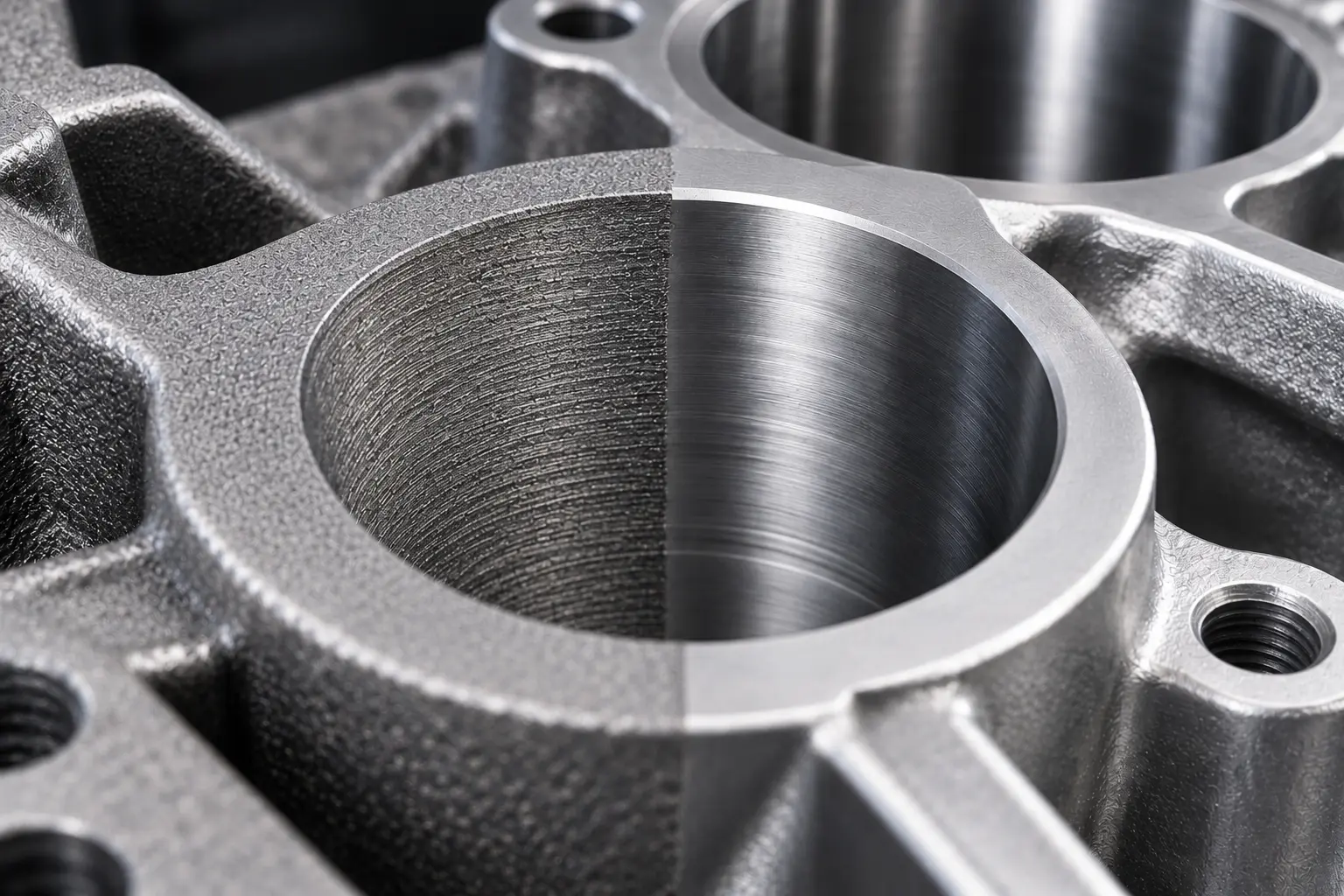
We develop customized laser technology solutions tailored to each product, material, and production requirement . From process development and parameter optimization to automation and system integration, every solution is designed around the specific needs of the application.
customized laser technology solutionsAdvantages of Laser Surface Treatment for Castings
Laser surface treatment provides a precise, contact-free, and highly controllable method for modifying functional surfaces on cast components . The process can be adapted to different casting materials, geometries, and production requirements, making it suitable for both localized treatment and automated serial production.
Precise and Selective Processing
Only the required functional area is treated, without affecting surrounding surfaces.
Controlled Surface Texturing
Defined microstructures and micro-grooves can be created to achieve specific surface properties.
Improved Adhesion
Improved surface conditions for subsequent bonding, coating, and sealing processes.
Minimal Impact on the Base Material
Contact-free processing with precisely controlled mechanical and thermal impact.
High Repeatability
Digitally controlled parameters enable consistent results across large production volumes.
Easy Automation and Integration
Integration into robotic cells, automated workstations, and existing production lines.