Laser Ablation
High-Precision Material Removal & Selective Layer Processing
Laser ablation is an advanced, non-contact manufacturing technology that enables the precise removal of material through controlled laser energy. By removing material layer by layer, the process delivers exceptional accuracy, repeatability and surface quality, even when processing complex geometries or sensitive components.
FibeerSX develops advanced laser solutions for precision machining, selective material removal and industrial surface processing, tailored to specific production requirements.
Precision Layer-by-Layer Material Removal
Micrometer-Level Accuracy. Complete Process Control.
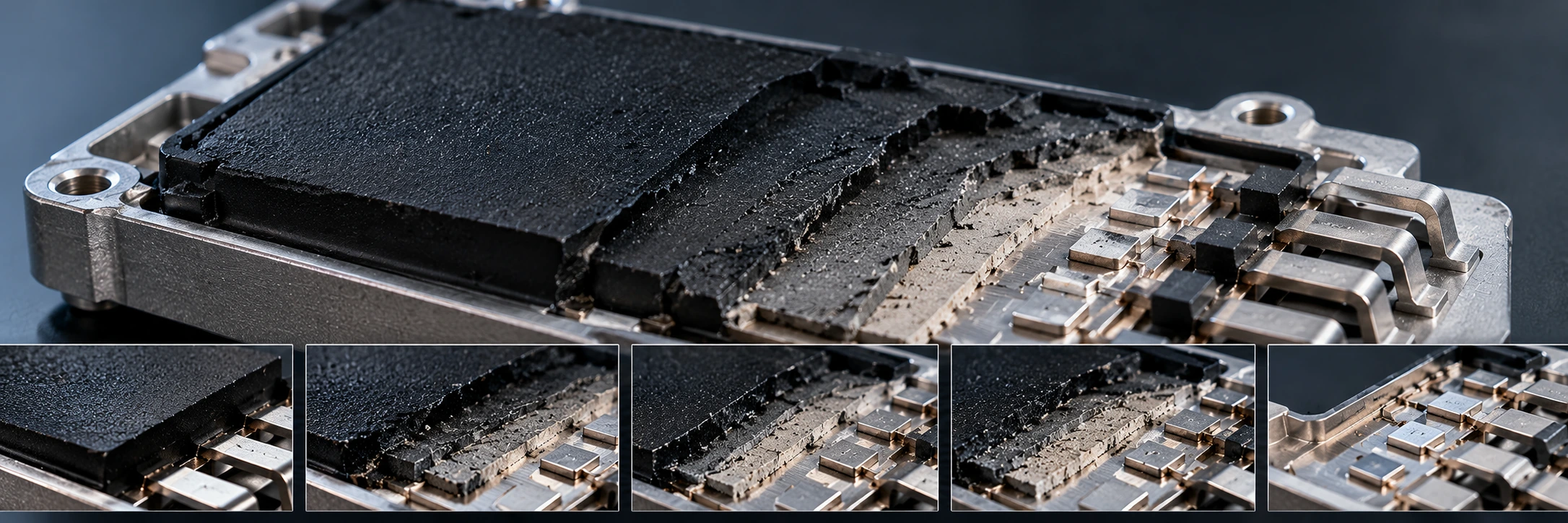
Laser ablation enables the controlled removal of extremely thin material layers without physical contact with the workpiece. By precisely adjusting laser parameters, pulse characteristics and scanning strategies, the removal depth and processing geometry can be adapted to the requirements of each application. The technology supports complex surface structures, fine contours, micro-cavities and intricate geometries while minimizing the heat-affected zone.
Key Capabilities
Selective Removal of Materials from Metal Surfaces
Remove the Unwanted Material. Preserve the Base Component.
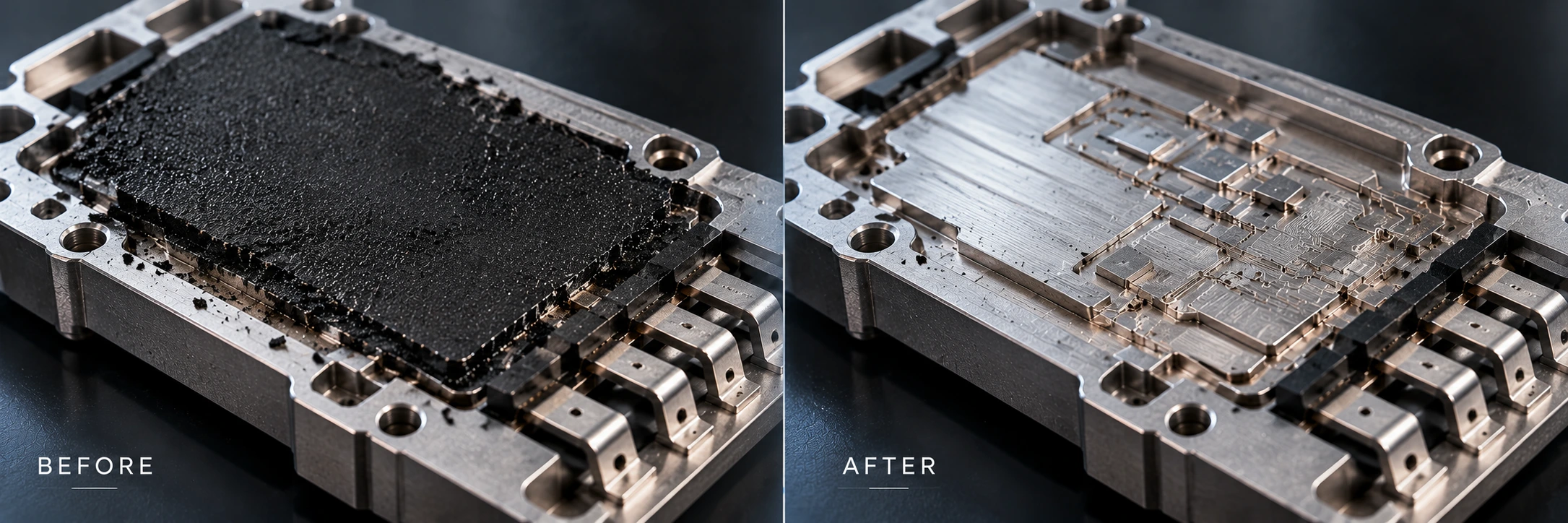
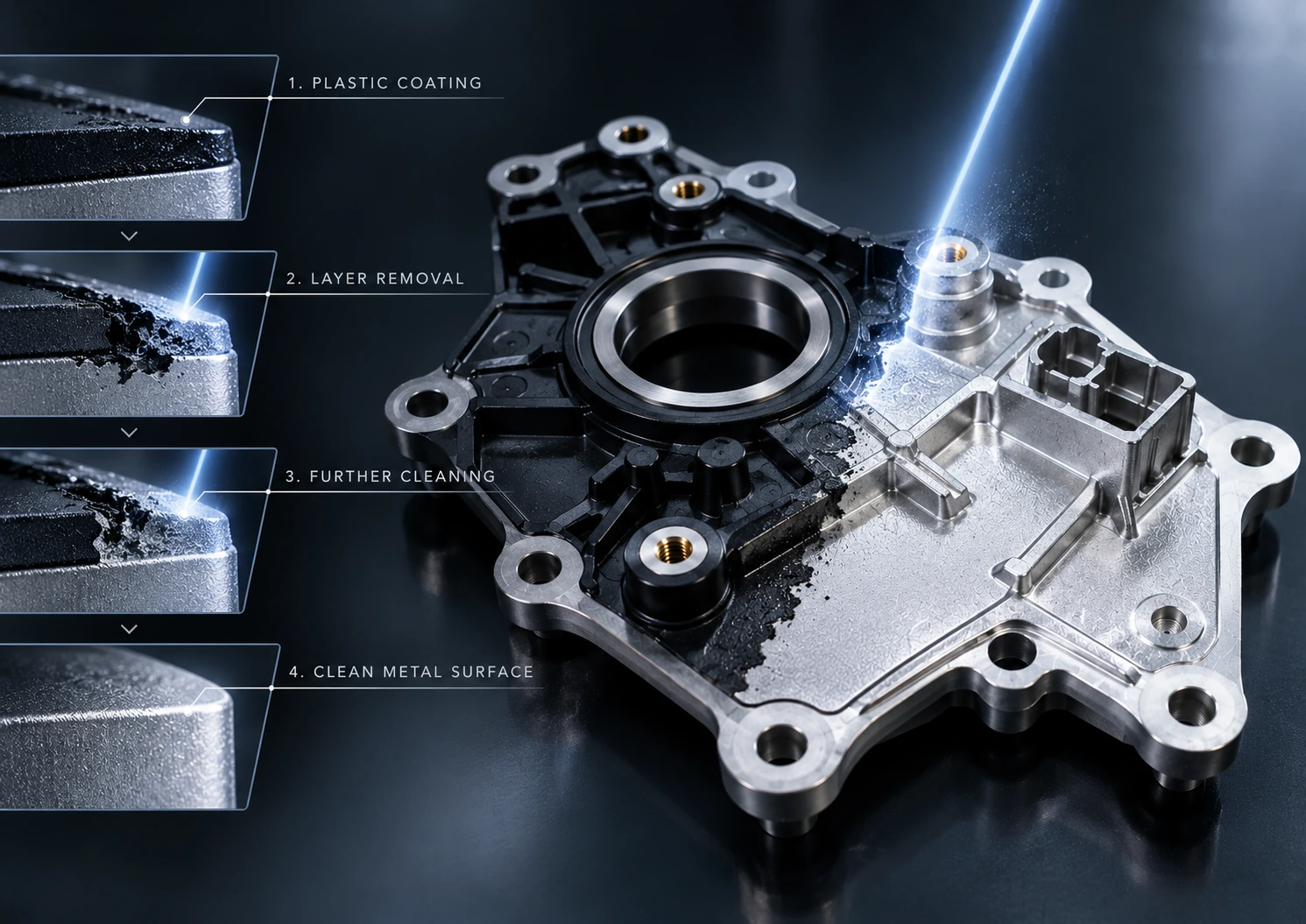
One of the most versatile applications of precision laser ablation is the selective removal of non-metallic materials, coatings and functional layers from metallic components. The laser process can be precisely adapted to target specific materials and remove them in controlled layers, including from complex three-dimensional surfaces.
 SELECTIVE MATERIAL REMOVAL
Materials That Can Be Removed
Select a material category to explore its applications.
With optimized processing parameters, the underlying metallic substrate can be preserved while the targeted material is selectively removed.
Selective Material Removal from Metal Surfaces
Remove Unwanted Layers. Preserve the Component.
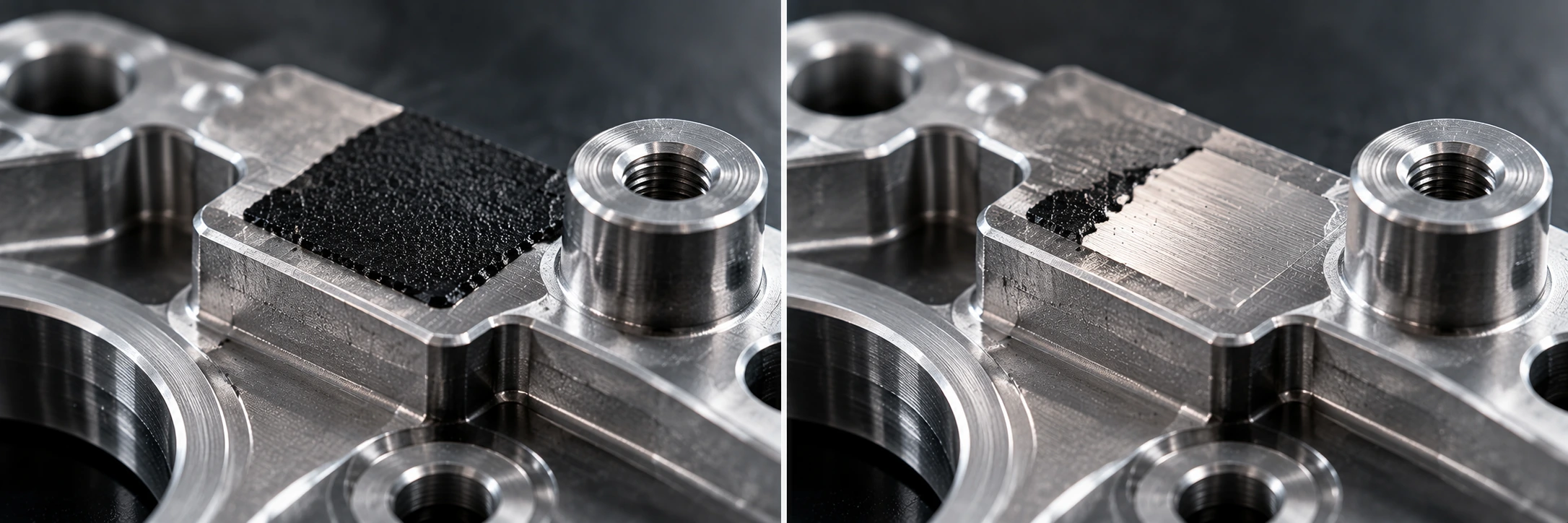
One of the most valuable applications of laser ablation is the selective removal of non-metallic materials and functional layers from metallic components. The technology allows specific materials to be targeted without requiring mechanical contact or aggressive chemical treatments. Whether removing thin protective coatings or more complex material layers, the process can be optimized to achieve consistent results while protecting the underlying metallic surface.
Non-Contact Material Removal
Protecting Sensitive Components Through Precision
Laser ablation operates without physical contact between the processing system and the component. Unlike mechanical stripping or abrasive cleaning methods, the process does not introduce direct mechanical forces, vibration or tool wear.
The laser energy is concentrated on the targeted processing area, enabling localized material removal with controlled thermal influence. With suitable process parameters, this helps preserve the integrity and functional properties of the underlying component.
Key Benefits
No mechanical contact with the workpiece
No abrasive tools or mechanical stripping
Reduced risk of surface deformation
Highly localized processing
Consistent and repeatable results
Suitable for sensitive and precision components
Intelligent Laser Ablation Systems
Advanced Automation. Precise Process Control.
FibeerSX laser ablation solutions are developed with a modular architecture, allowing systems to be adapted to specific materials, components and manufacturing environments.
Depending on the application, laser systems can incorporate advanced 3D scanning heads, camera-based component recognition, intelligent positioning, optical sensors and automated handling solutions. Camera-guided positioning systems can identify the actual location and orientation of a component, enabling automatic correction of processing coordinates when a part is not positioned exactly as expected. This supports consistent processing accuracy, reduced manual adjustment and reliable integration into automated production lines.

System Capabilities
Automated component recognition
Camera-guided positioning and alignment
3D surface processing
Precise control of laser parameters
Application-specific process configurations
Integration into automated manufacturing environments
Laser Ablation Testing & Application Development
Test Your Components. Discover New Possibilities.
Every industrial application presents unique material combinations, surface conditions and processing requirements. FibeerSX provides application-specific laser testing and process development using customer-supplied components.
Our specialists evaluate material behavior, develop suitable processing parameters and assess the achievable results under realistic application conditions. From selective plastic removal to adhesive stripping and complex surface processing, our testing approach helps identify effective laser ablation solutions before implementation.