
Laser Plastic Welding Invisible and Precise Joining
Invisible, Precise and Distortion-Free Bonding for Modern Industrial Manufacturing
Laser plastic welding is one of the most advanced technologies for joining polymer-based components without mechanical stress, visible defects or contamination. The process is fully non-contact, highly precise and produces exceptionally clean weld seams, including completely invisible joints with no discoloration or melt marks.
FibeerSX laser plastic welding solutions are designed for automotive, electronics, medical, sensor and consumer product manufacturing, where repeatability, aesthetics and long-term reliability are critical.
Laser Plastic Welding vs. Traditional Joining Methods
Localized energy input, digitally controlled geometry and no mechanical welding-tool contact.
FibeerSX laser plastic welding combines ±0.01 mm system positioning precision, laser scanning speeds of up to 14,000 mm/s and digitally programmable processing geometries. Energy can be concentrated directly into the joining zone, minimizing thermal influence on surrounding areas and supporting clean, repeatable and highly automated plastic joining processes.
| Comparison | Laser Plastic Welding FibeerSX Laser Technology | Ultrasonic Welding Mechanical Vibration | Hot Air Welding Thermal Joining | Adhesive Bonding Chemical Joining | Contact Heat Welding Heated Tool Joining |
|---|---|---|---|---|---|
| System Positioning Precision | ±0.01 mm FibeerSX system positioning precision | Machine and fixture dependent | Tool and operator / system dependent | Dispensing and fixture dependent | Tool and fixture dependent |
| Maximum Laser Scan Speed | Up to 14,000 mm/s maximum optical scanning speed; actual welding cycle depends on application | Cycle dependent | Heating and travel speed dependent | Dispensing + curing cycle | Heating and cooling cycle dependent |
| Energy Delivery | ✓ Optical / non-contact | Mechanical vibration | Heated air | Adhesive layer | Heated tool |
| Welding Tool Contact | 0 no mechanical welding tool contacts the joining zone | Horn contact required | No direct heated-tool contact | Adhesive physically contacts both surfaces | Direct heated-tool contact |
| Thermal Influence Zone |
Localized & Focused
energy concentrated in the defined joining area
|
Localized but vibration and friction generate heat | Broader heated area | No welding heat required | Heat transferred through contact tooling |
| Heat Input Control | ✓ Highly controllable laser power, speed and processing geometry are digitally controlled | Amplitude / pressure / time dependent | Air temperature and exposure dependent | Not a thermal welding process | Tool temperature / pressure / time dependent |
| Visible Surface Discoloration | ✓ Can be avoided with compatible materials and validated process parameters | Application dependent | Thermal marks may occur | Adhesive visibility / residue possible | Heat marks may occur |
| Surface Deformation | ✓ Can be minimized localized energy input reduces unnecessary thermal loading | Mechanical pressure and vibration must be considered | Thermal deformation possible | Generally low thermal deformation | Thermal and pressure deformation possible |
| Hidden / Invisible Joint Potential | ✓ Excellent material combination and joint design dependent | Joint geometry dependent | Usually visible | Possible depending adhesive and geometry | Tool marks may remain |
| Added Joining Material | 0 adhesive in suitable transmission laser welding applications | Normally none | Filler may be application dependent | Adhesive required | Normally none |
| Adhesive Curing Time | 0 min no adhesive curing step in the laser welding process | No adhesive curing | No adhesive curing | Adhesive-specific curing time required | No adhesive curing |
| Weld Geometry |
Digitally Programmable
weld path can be changed through software
|
Horn / tooling geometry dependent | Tool path dependent | Dispensing geometry dependent | Heated-tool geometry dependent |
| Geometry Changeover | ✓ Software / recipe based | Tooling / horn changes may be required | Program / tooling adjustment | Dispensing program / fixture adjustment | Tooling change may be required |
| Complex Weld Paths | ✓ High flexibility | Tooling dependent | Process-access dependent | Dispensing-access dependent | Tool geometry dependent |
| Mechanical Vibration During Welding | 0 no vibration is required to generate the weld | Required by process | None from welding principle | None from bonding principle | None from welding principle |
| Automation Potential | ✓ Excellent PLC, robot and production-line integration | Excellent | Automatable | Highly automatable | Highly automatable |
| Digital Recipe Storage | ✓ Process recipes | Available in automated systems | Available in automated systems | Available in automated systems | Available in automated systems |
| Process Monitoring | ✓ Digital laser parameters and recipe data can be monitored | System dependent | System dependent | Dispensing and curing data can be monitored | Temperature / pressure / time monitoring possible |
| Traceability | ✓ Recipe & process data | Possible with integrated system | Possible with integrated system | Possible with integrated system | Possible with integrated system |
| High-Mix Production | ✓ High flexibility product-specific digital welding recipes | Tooling dependent | Setup dependent | Material / dispensing / curing dependent | Tooling dependent |
| Typical Application Fit | Precision plastic assemblies, sensors, housings, electronic components, visible Class-A surfaces and automated production where localized and repeatable energy input is required. | High-volume plastic joining where vibration and mechanical contact are acceptable. | Larger thermoplastic components and applications compatible with broader heating. | Dissimilar materials and assemblies compatible with adhesive bonding. | Thermoplastic joints compatible with heated-tool contact and pressure. |
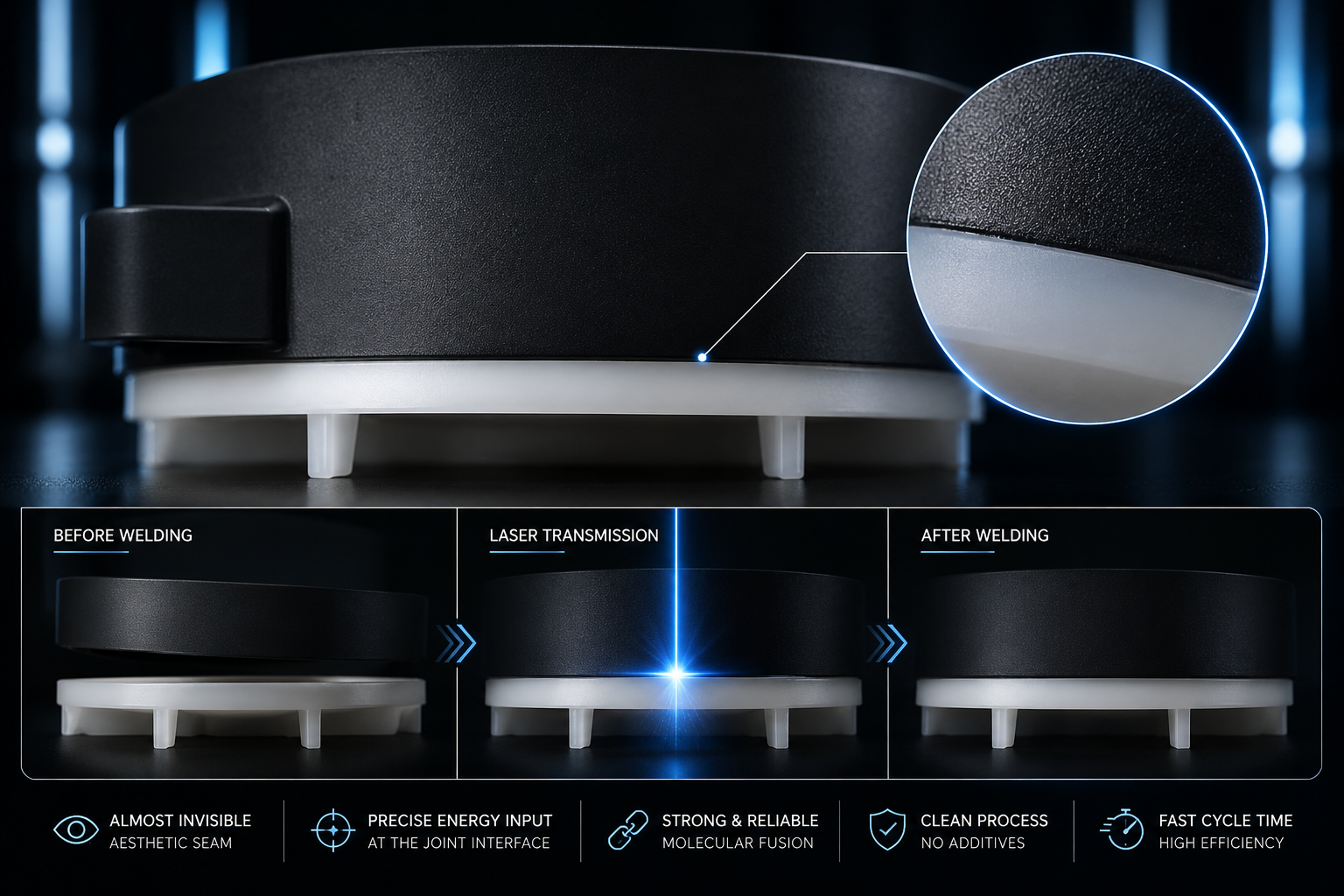
Why Laser Plastic Welding Is Unique
One of the most remarkable advantages of laser plastic welding is the so-called
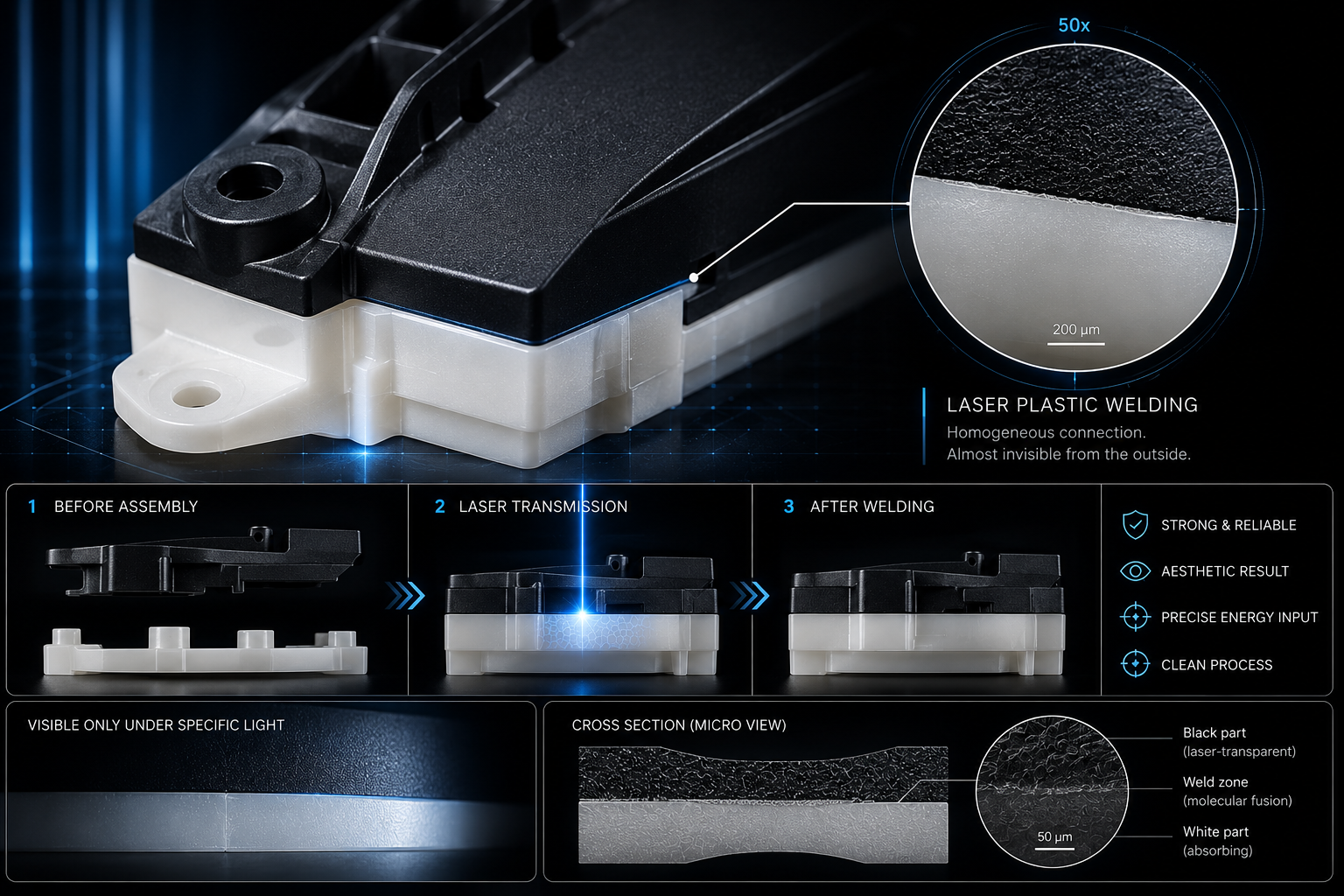
invisible weld (also known as “clear-to-clear welding”), which creates a completely hidden joint between two plastic parts.
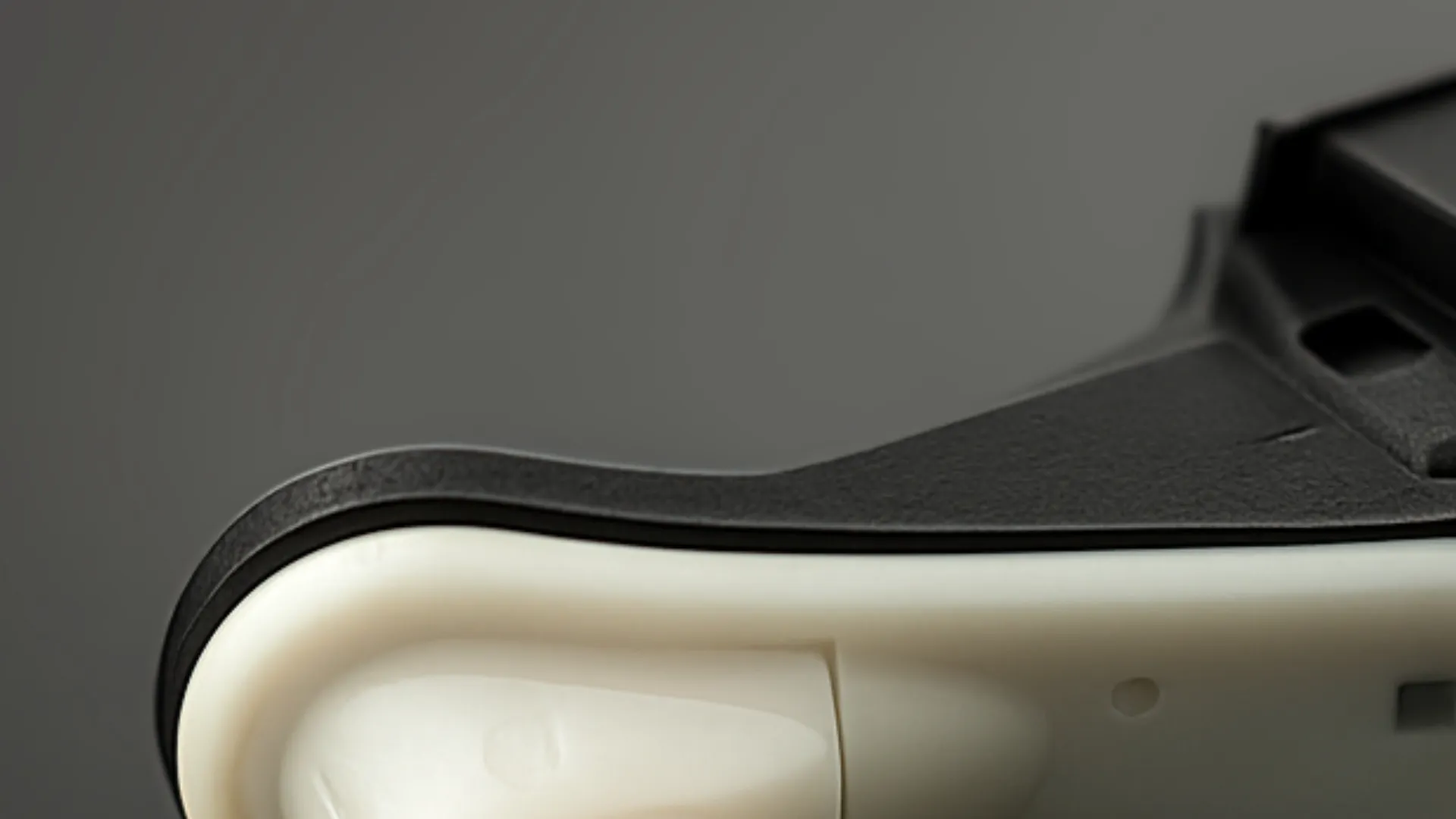
No weld seam appears on the outside, there is no discoloration, no melt ridge, no burr and no surface disturbance, leaving the final product perfectly clean and visually flawless.
The resulting joint is often mechanically stronger than the base material itself, as the weld is homogeneous, contamination-free and created at a precisely controlled depth.
This technology is exceptionally valuable in industries where premium appearance and high structural integrity are required simultaneously, such as medical devices, high-end electronic housings, automotive interior components and consumer products where ultra-clean bonding is essential.
Advantages of Laser Plastic Welding
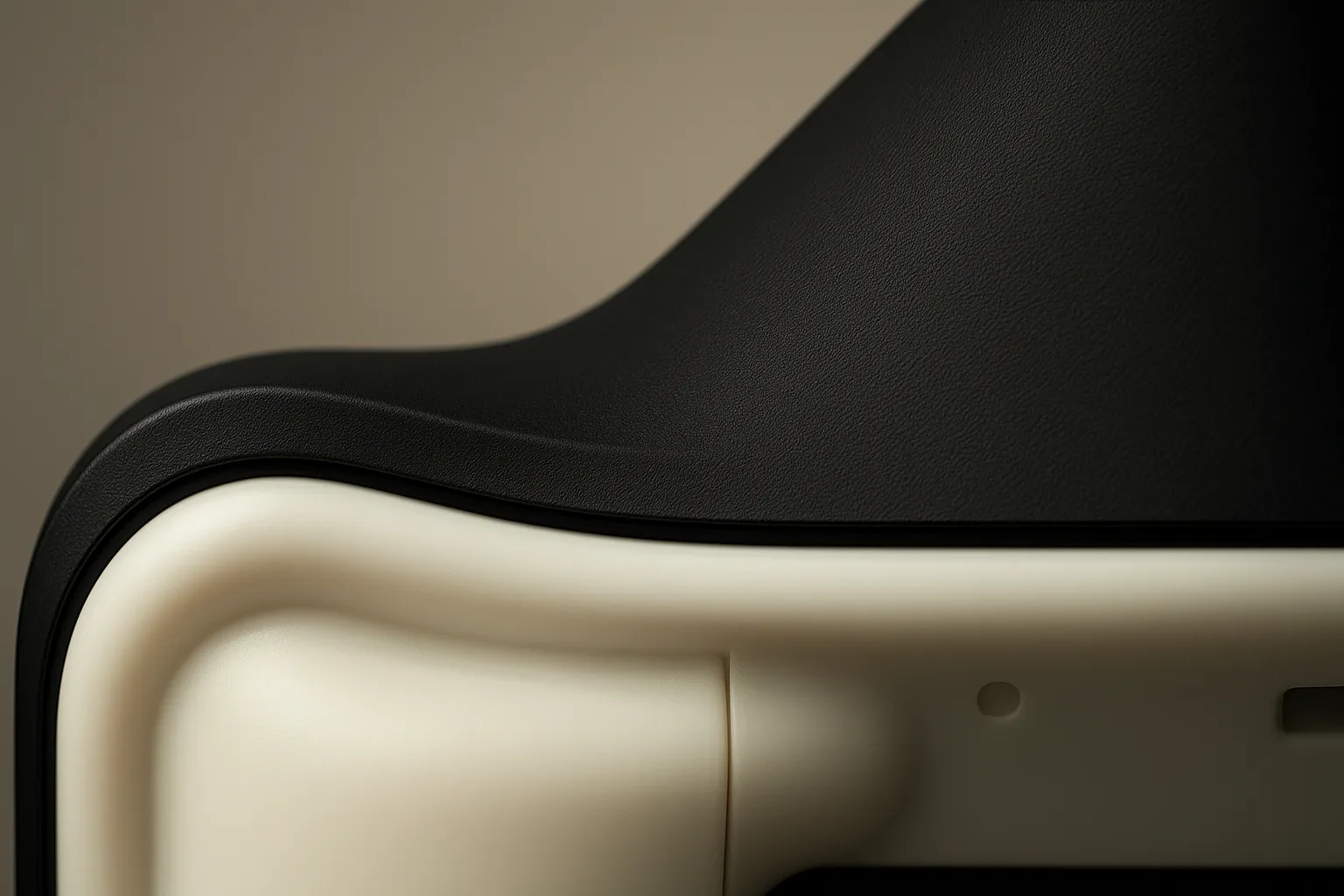
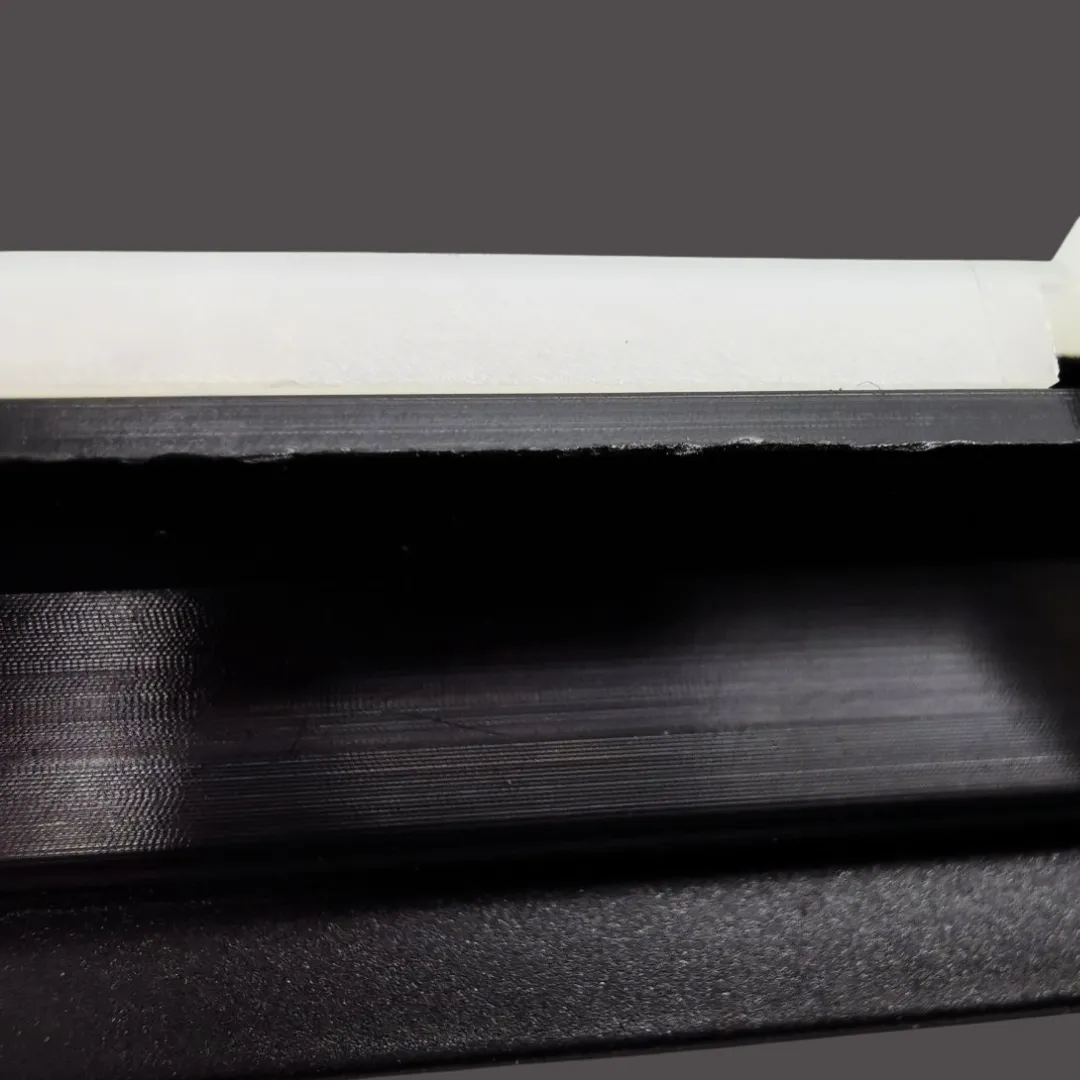
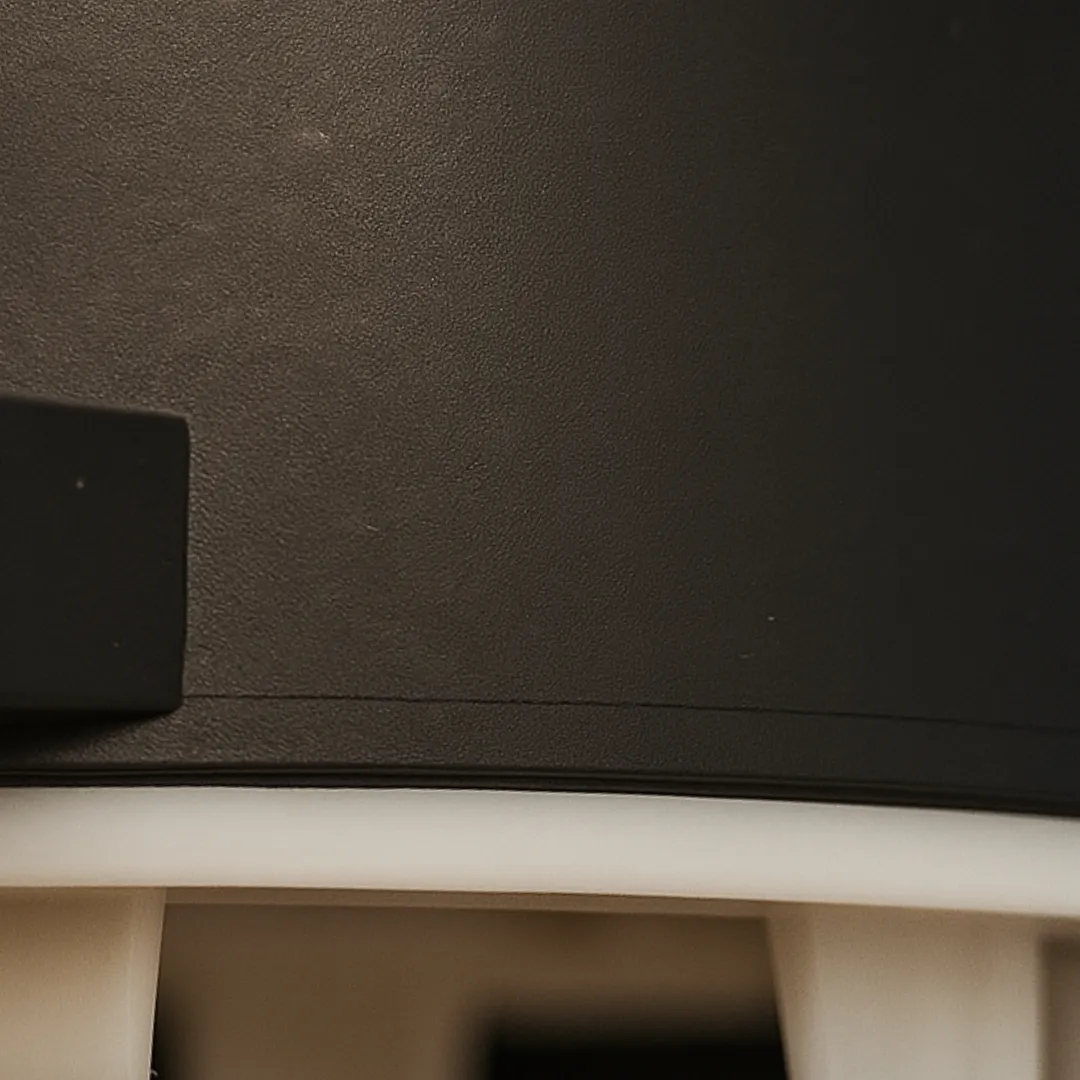
Invisible, Aesthetic Welds
One of the greatest benefits of laser plastic welding is the creation of fully invisible joints that leave no trace on the exterior surface.
The process produces no melt ridge, no discoloration and no burrs, resulting in a perfectly homogeneous and aesthetically flawless finish.
This makes laser welding the ideal choice for high-end products where visual quality is essential, including automotive interior components, electronic housings, IoT devices and premium consumer products.

Where Is Laser Plastic Welding Used?
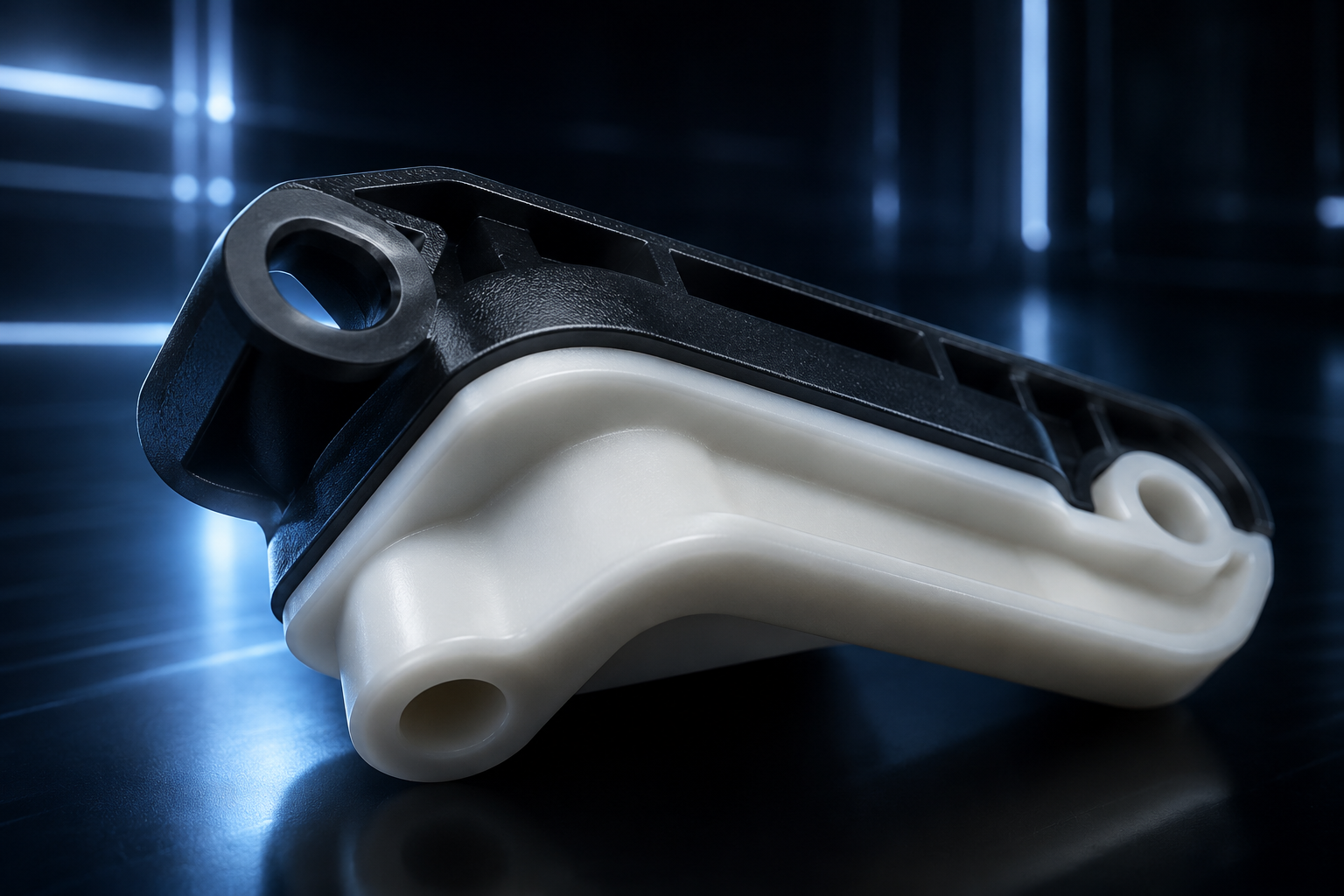
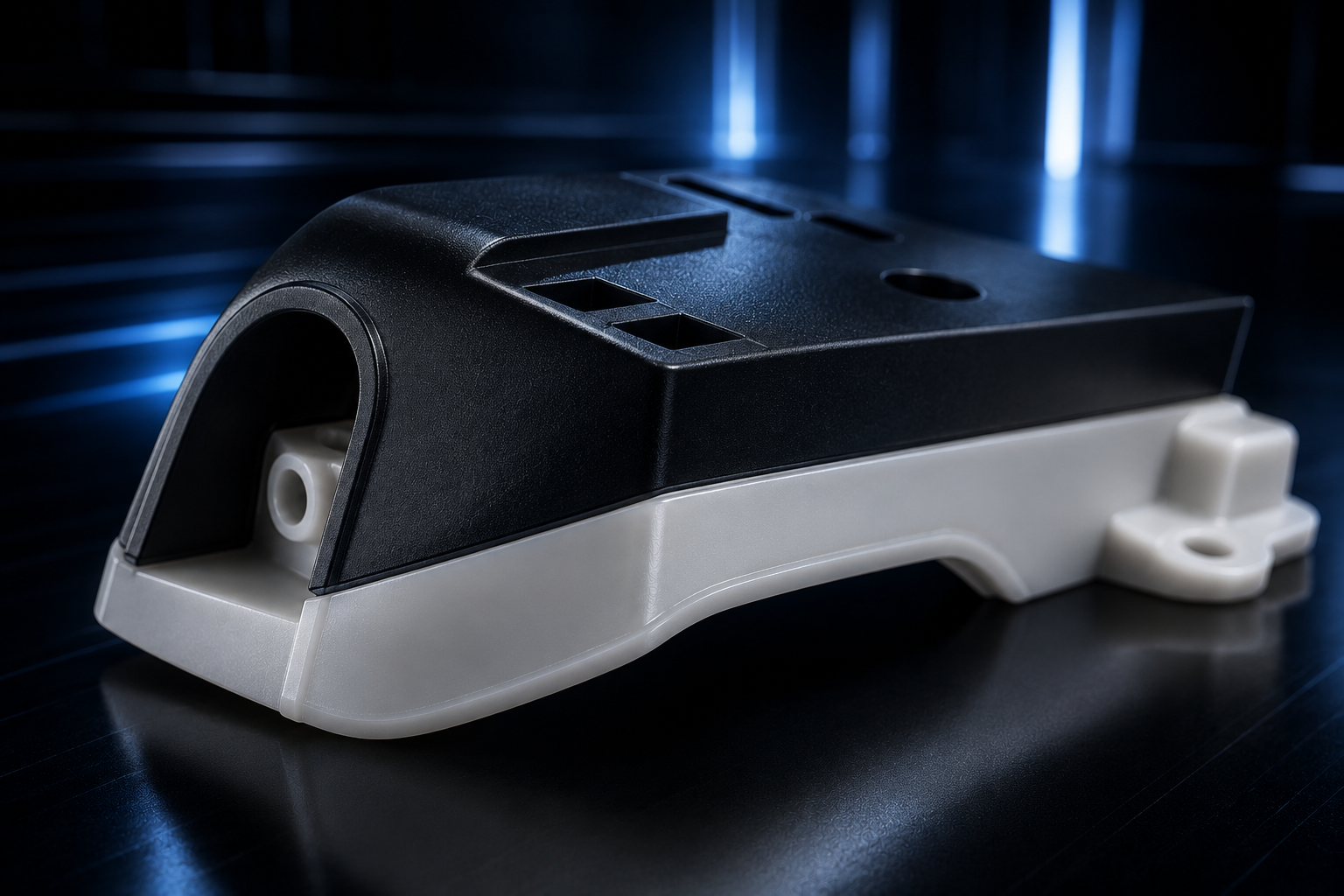
Laser plastic welding is widely adopted wherever manufacturers require invisible joints, high reliability, watertight sealing and exceptional product aesthetics. The technology combines precision, repeatability and automation readiness in a single production process.
Interior trims, sensors, radar housings, lighting systems and connectors.
Waterproof housings, battery devices and sensitive electronic assemblies.
Sterile components, tubing connectors and hermetically sealed assemblies.
Premium electronics, cosmetic devices and high-end plastic products.