
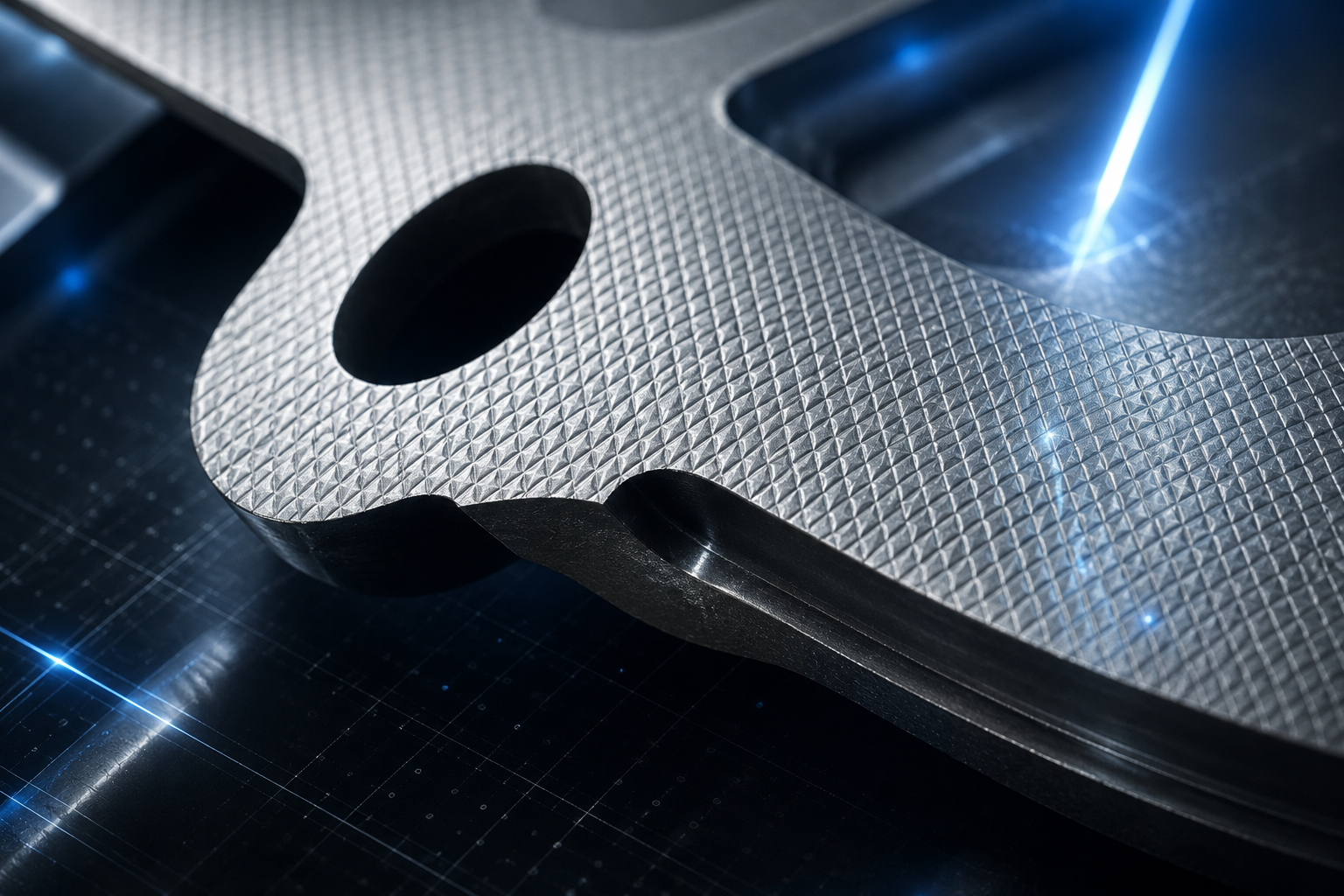
Laser Coating Pretreatment
Laser coating pretreatment is a precise surface-conditioning method that optimizes
the substrate before coating, painting, adhesion promoters or protective layers are
applied. The laser selectively removes oxides, contamination and weak surface layers
while simultaneously creating an optimized microstructure that significantly improves
coating adhesion and long-term durability.
Unlike conventional surface preparation methods, the laser process is completely
contact-free, chemical-free and highly repeatable. It eliminates consumables, reduces
maintenance requirements and can be fully integrated into automated production lines,
making it an ideal solution for automotive, aerospace, electronics, battery manufacturing
and other high-value industrial applications where maximum coating performance and process
stability are essential.
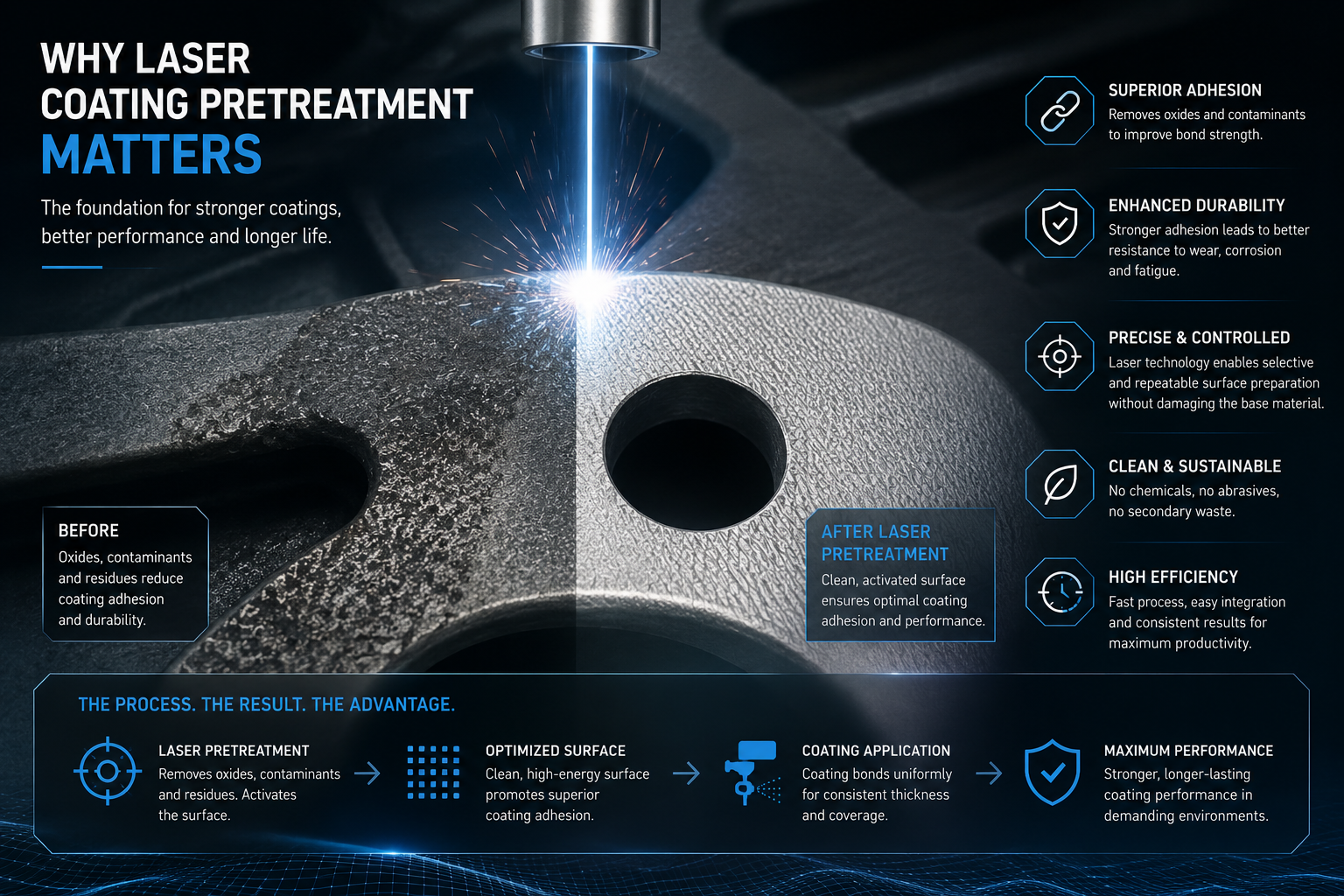
Why Laser Coating Pretreatment Matters
Laser coating pretreatment creates the ideal surface for high-performance coatings by removing oxides, contaminants and surface residues while activating the material without damaging the base metal. The result is stronger adhesion, longer coating life and a more reliable manufacturing process.
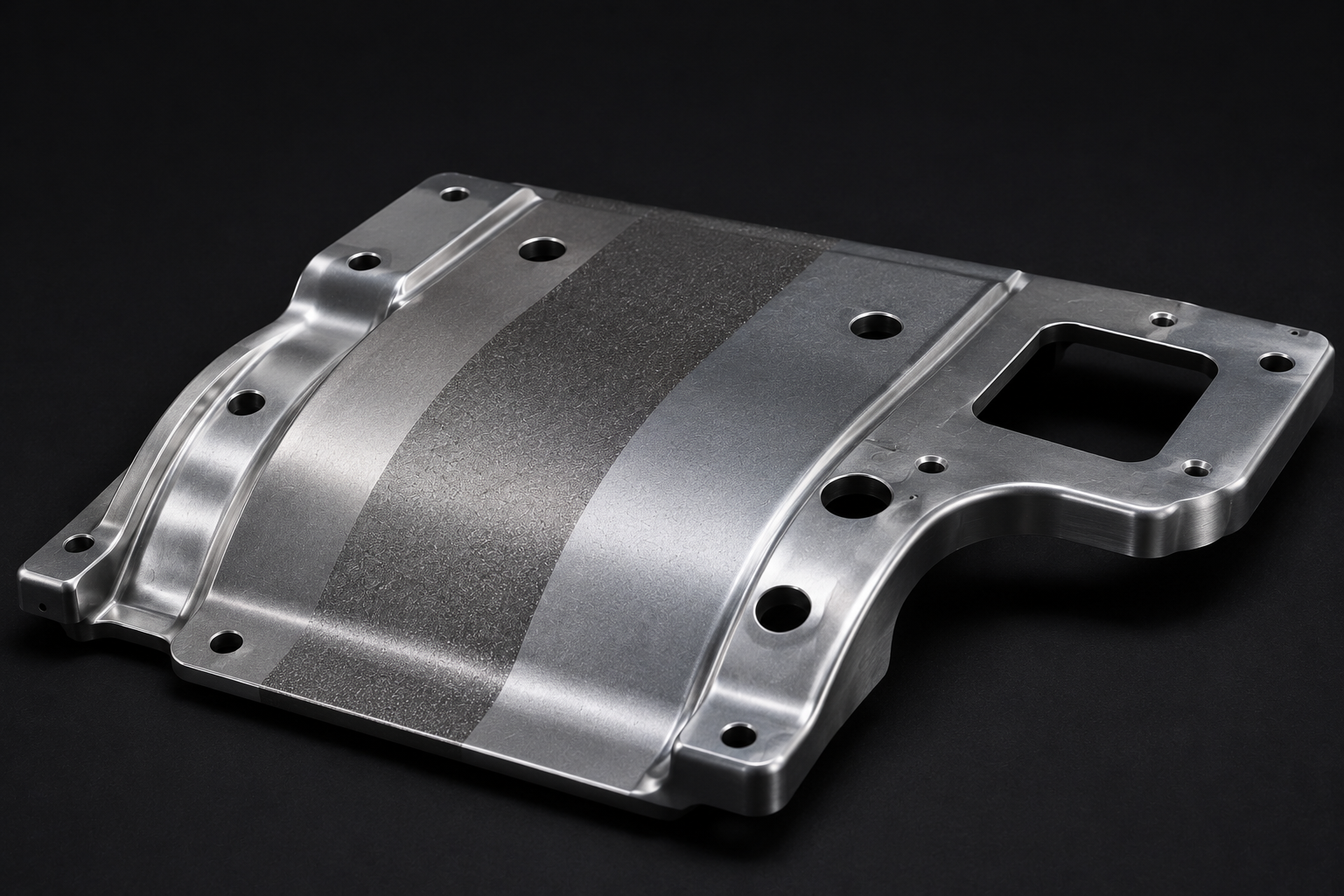
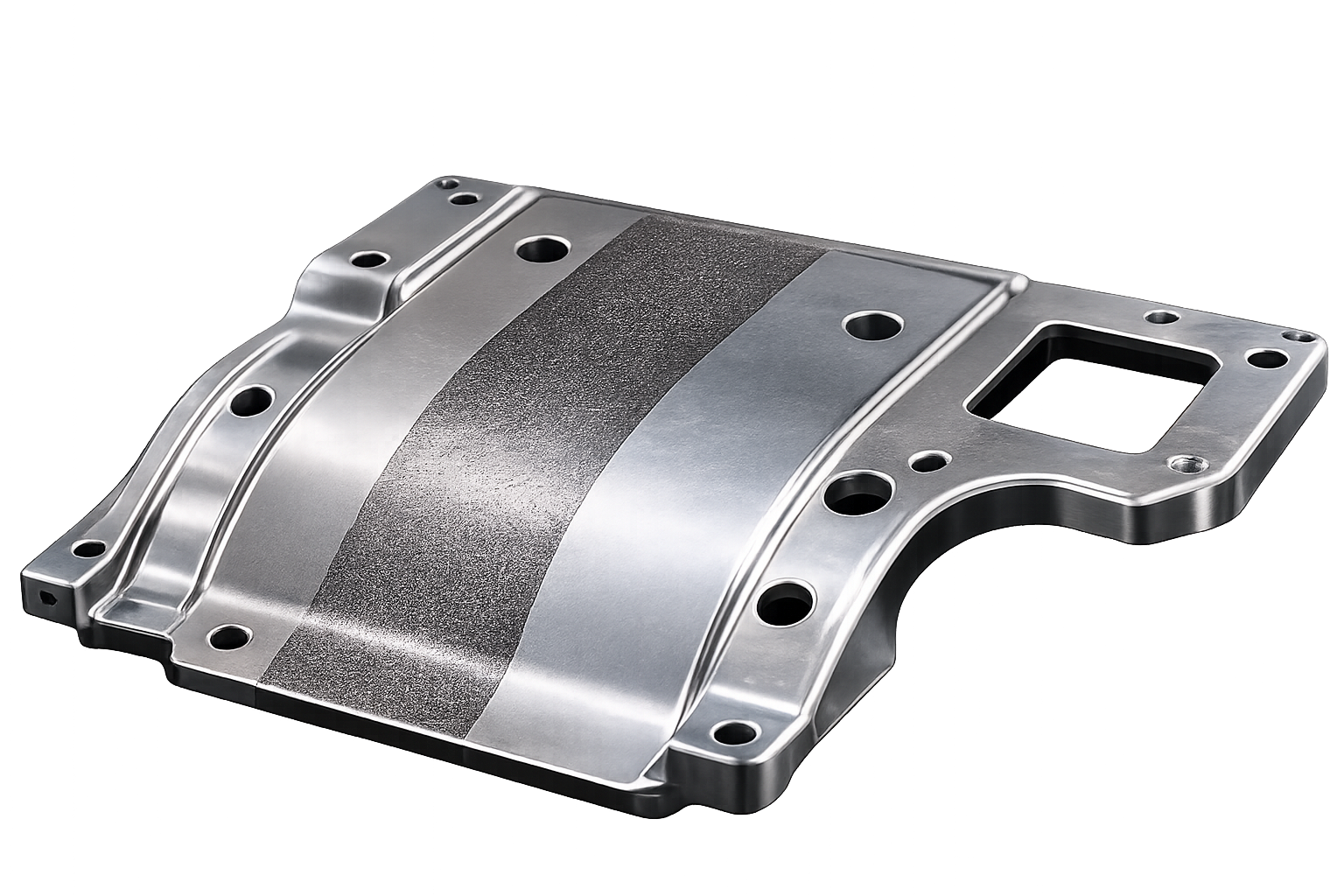
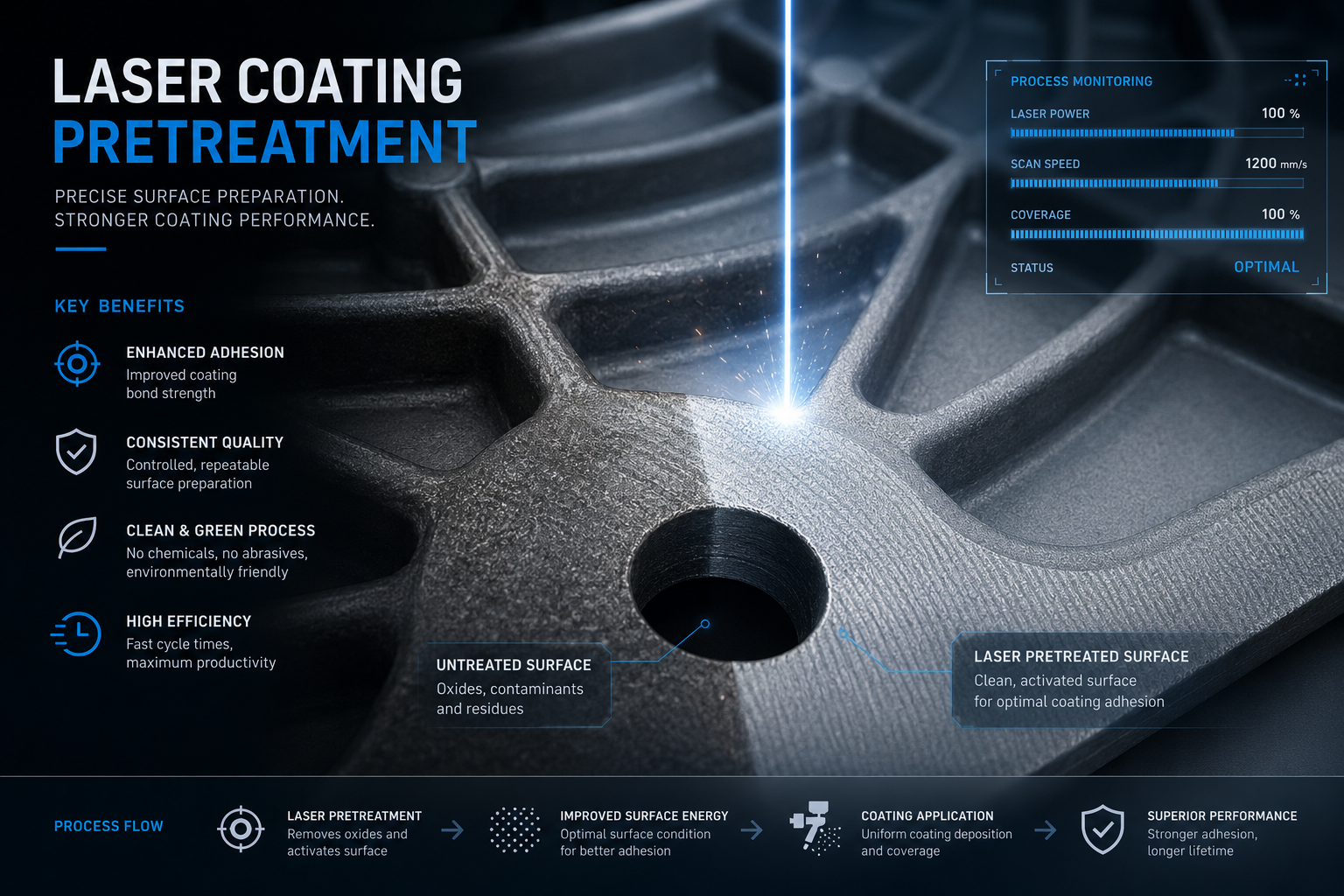
Before
The untreated surface contains oxides, contaminants and microscopic impurities that reduce coating adhesion, consistency and long-term durability.
After Laser Pretreatment
The laser-treated surface is clean, activated and optimized for coating application, ensuring maximum bond strength and a uniform finish.
Precision without contact. Repeatability without tool wear.
Laser coating pretreatment combines high-speed processing, ±0.01 mm beam precision, digital process control and up to 100,000 hours of laser source lifetime in a highly automated surface preparation process.
Laser Coating Pretreatment vs. Conventional Surface Preparation
| Comparison | Laser Coating Pretreatment | Conventional Surface Preparation |
|---|---|---|
| Processing Speed | Up to 14,000 mm/s scanning speed | Process-dependent |
| Beam / Positioning Precision | ±0.01 mm | Tool- and process-dependent |
| Laser Source Lifetime | Up to 100,000 operating hours | Periodic tool / component replacement |
| Process Type | Non-contact | Mechanical, abrasive or chemical |
| Selective Treatment | Highly precise, localized treatment | Often affects larger areas |
| Surface Modification | Digitally adjustable | Tool / abrasive / chemical dependent |
| Repeatability | High – recipe-based parameters | Depends on tool condition and process stability |
| Tool Wear | No mechanical tool wear | Tools and abrasives wear during operation |
| Consumables | Very low process consumable requirement | Abrasives, media or chemicals may be required |
| Masking | Can often be minimized or avoided | Frequently required |
| Mechanical Contact | None | Mechanical contact or abrasive impact |
| Treatment Geometry | Digitally programmable | Tooling and accessibility dependent |
| Micro-Texturing | Controlled microstructures | Less digitally controllable |
| Process Changeover | Software / recipe-based | May require tooling or setup changes |
| Automation | Robotic & inline integration | Additional equipment may be required |
| Process Monitoring | Digital monitoring & documentation | Process-dependent |
| Traceability | Recipe & production data integration | Often requires additional systems |
| Waste Generation | No spent abrasive media | Abrasive, chemical or machining waste |
| Production Environment | Clean, enclosed & automatable | Dust, media or chemicals may require management |
| Complex Geometries | Programmable robotic path following | Accessibility can limit processing |
| Production-Line Integration | Direct inline integration | Dedicated preparation station often required |
| Process Flexibility | Multiple geometries via software & recipes | Additional tooling or setup may be required |
Key Benefits
Precise, repeatable and sustainable surface preparation for high-performance industrial coating processes.
Superior Adhesion
Creates an activated surface that significantly improves coating bond strength and long-term reliability.

Enhanced Durability
Improves resistance to wear, corrosion and fatigue by providing an optimal foundation for protective coatings.

Precision & Control
Selective and repeatable laser processing prepares only the required areas without affecting the surrounding material.
Clean & Sustainable
A dry and chemical-free process with no abrasives, no secondary waste and minimal environmental impact.
High Efficiency
Fast processing speeds, easy automation and consistent quality make laser pretreatment ideal for industrial production.
Process Flow
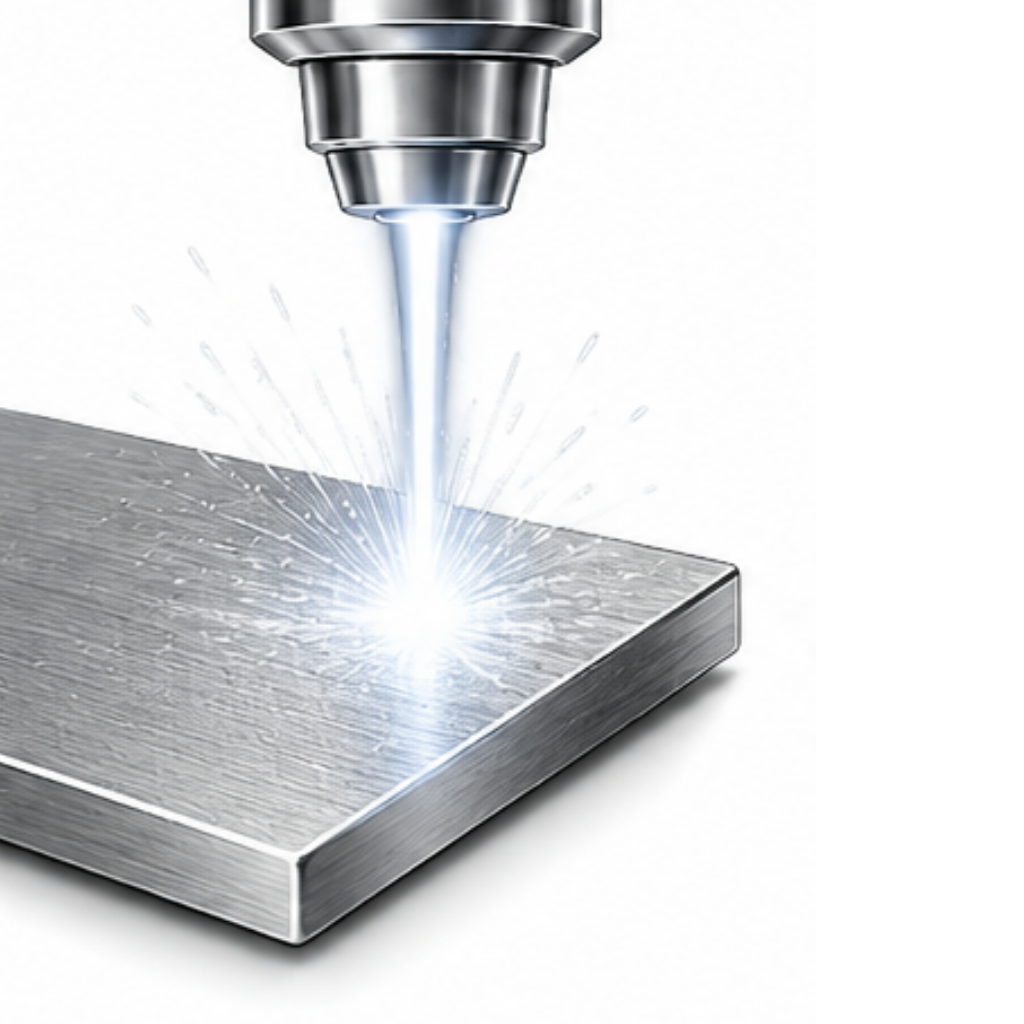
Laser Pretreatment
Removes oxides, oils and contaminants while activating the surface.
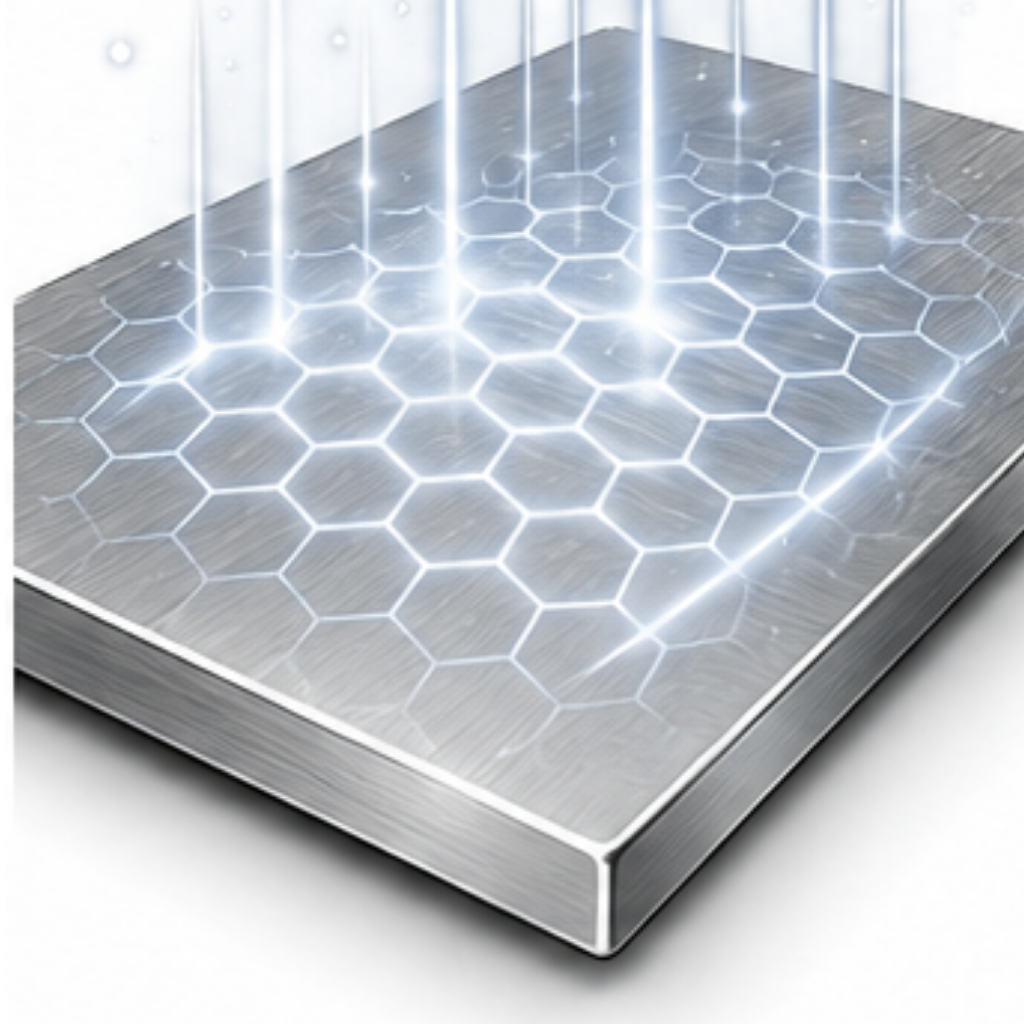
Surface Activation
Creates a high-energy surface with improved wettability and adhesion properties.
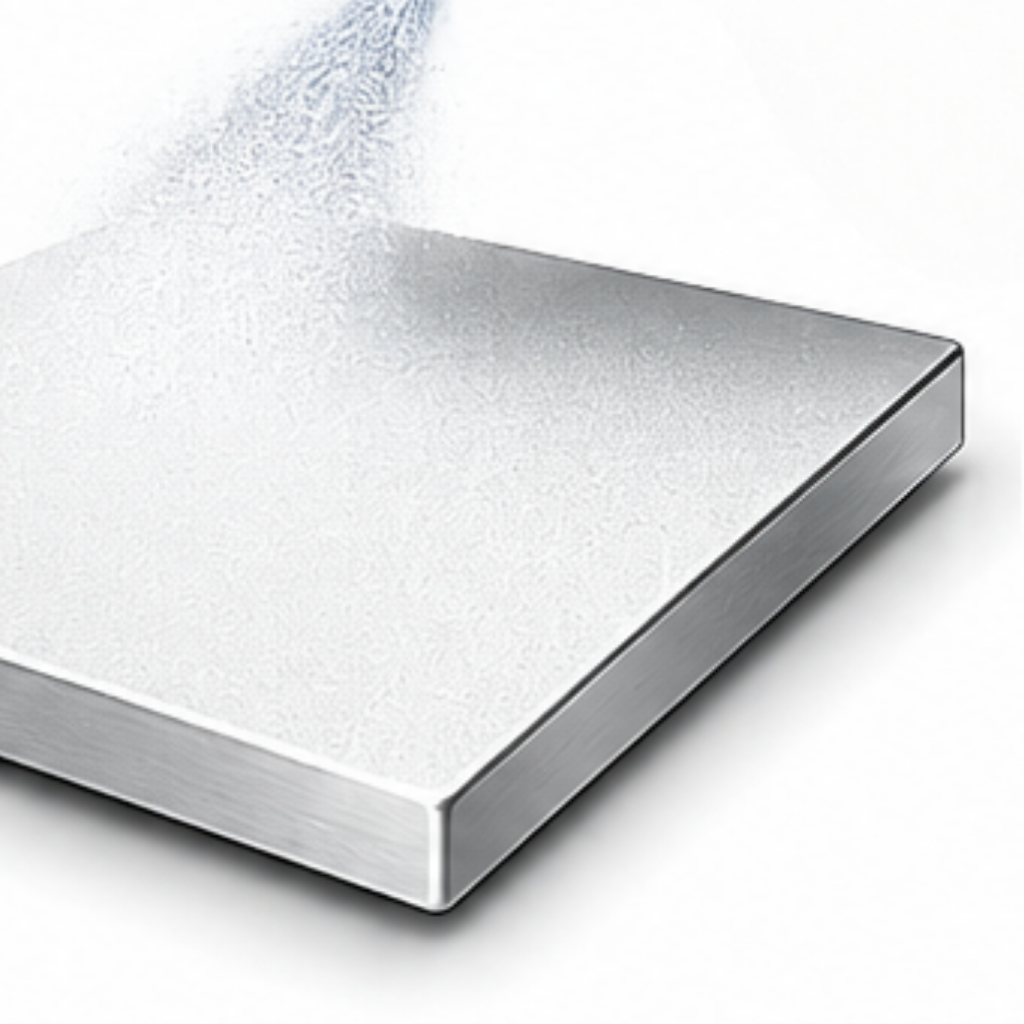
Coating Application
Ensures uniform coating thickness, excellent bonding and consistent coverage.
Superior Performance
Delivers longer coating lifetime, increased durability and improved product quality.
Why is Laser Coating Pretreatment Beneficial?
Laser surface pretreatment prepares materials for coating applications by creating a clean, activated and highly consistent surface. The process improves coating performance while eliminating the need for chemicals or abrasive media.
By removing contamination, oxides and weak boundary layers, laser technology creates ideal surface conditions for long-term coating adhesion and durability.
