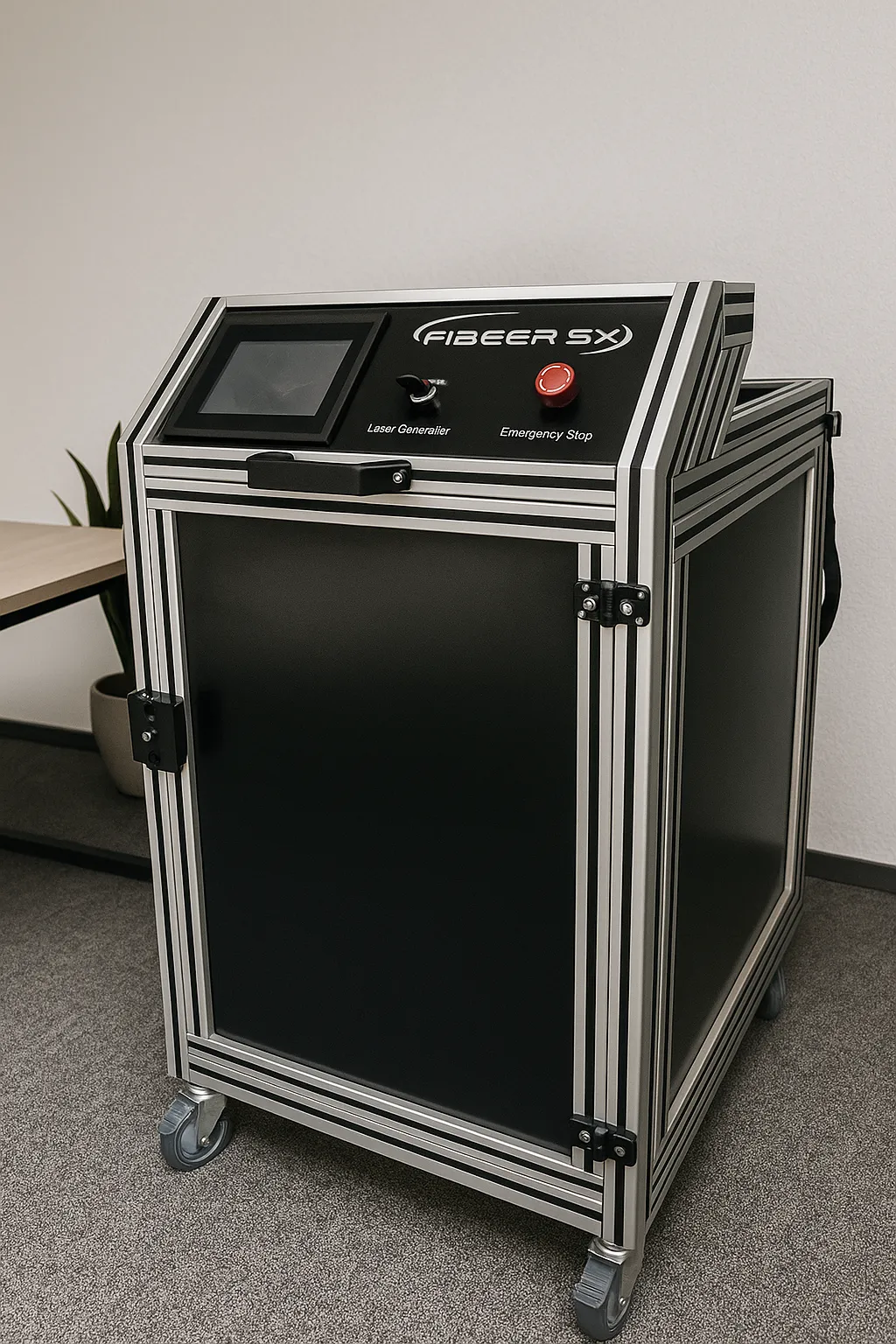
Laser Cleaning of Jigs and Hangers
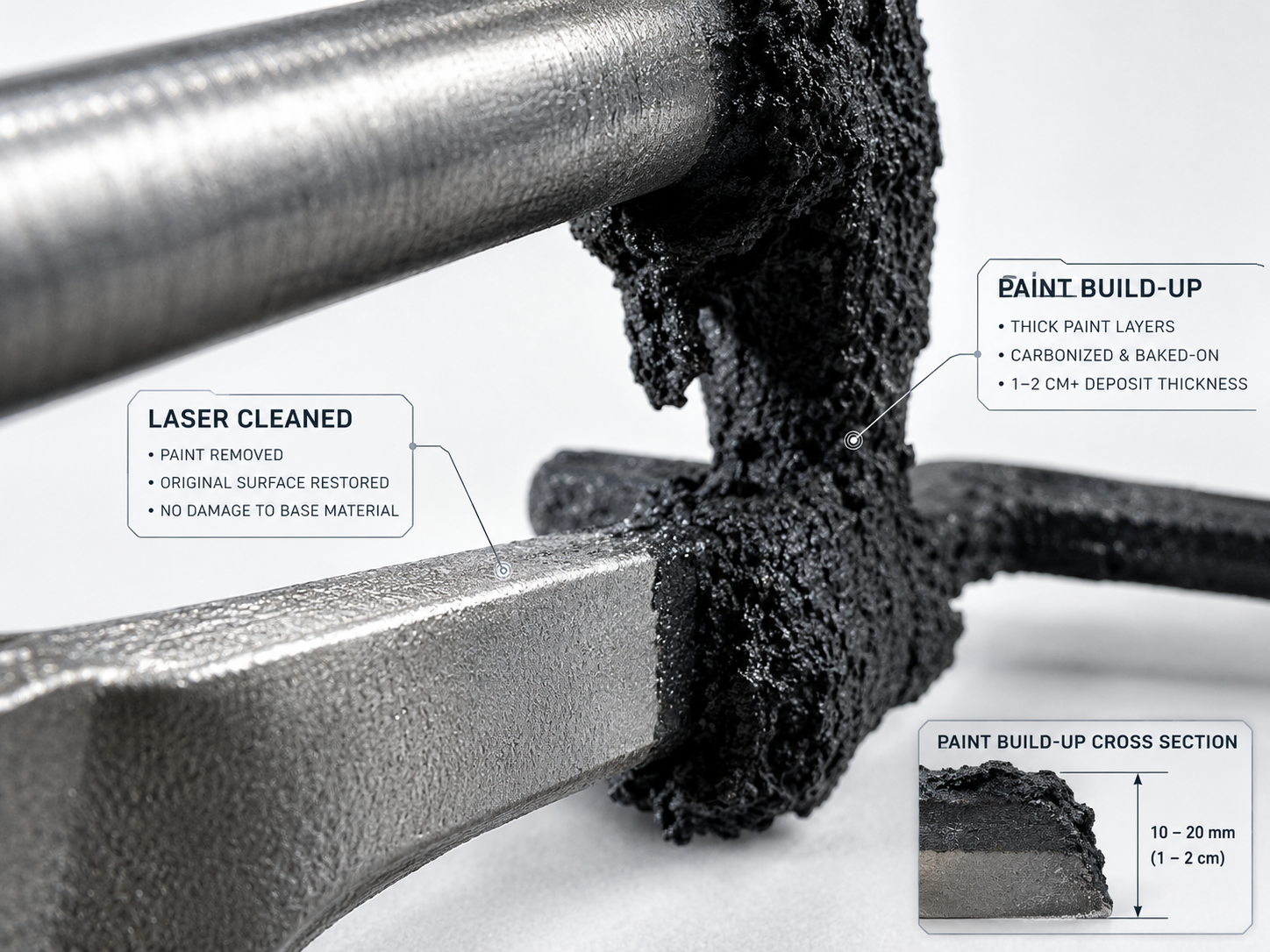
Jigs, racks, hangers and masking frames used in paint shops rapidly accumulate layers of paint, dust and lacquer. These deposits reduce process reliability, increase maintenance demand and can directly affect final coating quality.
What Contaminated Jigs and Hangers Cause
Paint, dust and lacquer deposits affect electrical contact, fixture stability, coating consistency and the overall efficiency of maintenance processes.
Reduced Conductivity
Paint buildup prevents reliable electrical contact at critical fixture points.
Unstable Part Holding
Contamination can compromise positioning accuracy and secure component support.
Higher Scrap Rates
Poor fixture condition can contribute to defects, rejects and repeated production losses.
Paint Quality Risk
Deposits can negatively affect coating consistency and the appearance of finished parts.
Higher Labour and Maintenance Costs
Conventional cleaning increases manual labour, processing time and recurring maintenance expense.
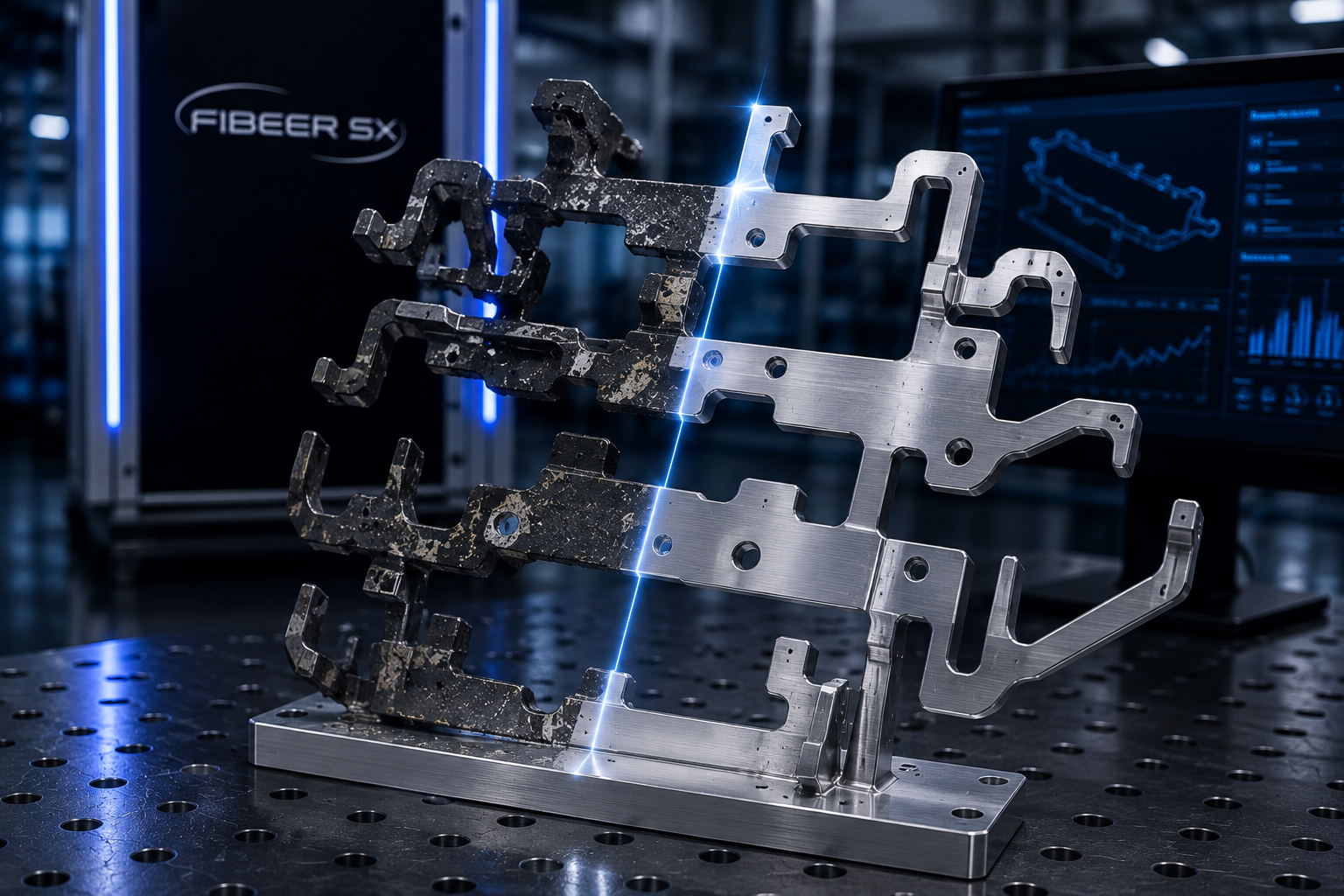
Why Laser Cleaning Is the Better Alternative
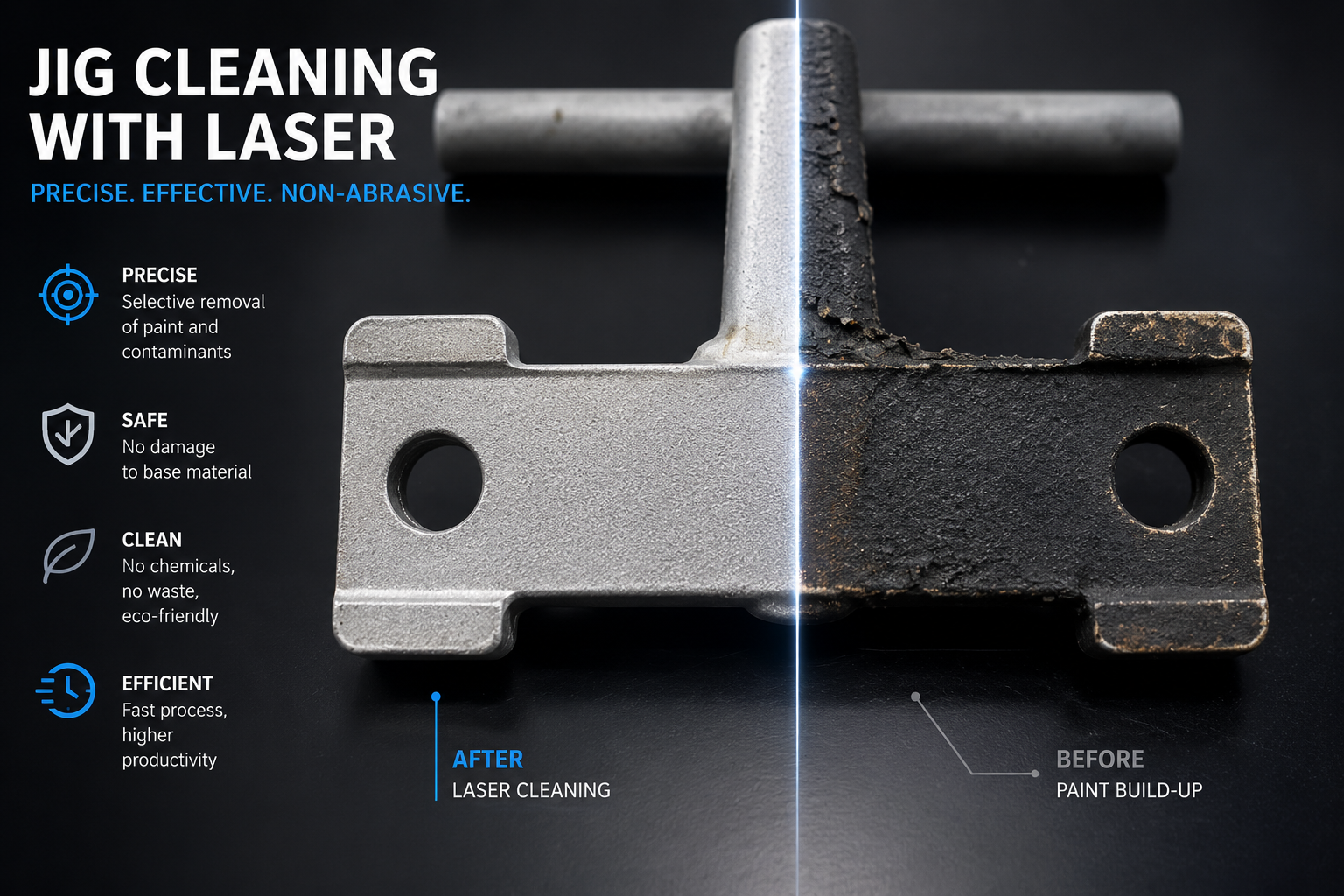
Traditional methods such as burning, blasting and chemical soaking are time-consuming, wasteful and may damage fixture surfaces. Fibeer SX laser cleaning is contact-free, fast and precise, removing contamination without chemicals, abrasive media or mechanical stress on the jigs and hangers.
Laser JIG Cleaning vs. Conventional Cleaning Processes
No chemical bath. No high-temperature burning. Only the required area is treated.
FibeerSX laser JIG cleaning provides a precise, non-contact alternative to chemical washing and thermal cleaning. With up to 14,000 mm/s scanning speed, ±0.01 mm system positioning precision and digitally programmable cleaning areas, the process can selectively treat only the required surfaces. Laser cleaning eliminates the need for chemical cleaning baths and avoids exposing the complete JIG to the high temperatures associated with thermal cleaning processes.
| Comparison | Laser JIG Cleaning FibeerSX Laser Technology | Chemical Washing Wet Chemical Cleaning | Thermal Cleaning / Burning High-Temperature Cleaning |
|---|---|---|---|
| Process Type | ✓ Non-contact laser process | Wet chemical process | High-temperature thermal process |
| Maximum Scan Speed | Up to 14,000 mm/s maximum laser scanning speed; actual cleaning cycle depends on contamination and process parameters | Washing cycle dependent | Heating, holding and cooling cycle dependent |
| System Positioning Precision | ±0.01 mm FibeerSX system positioning precision | No equivalent optical positioning | No equivalent optical positioning |
| Laser Source Lifetime | Up to 100,000 h laser source operating lifetime | Not applicable | Not applicable |
| Selective Cleaning |
✓ Digitally Defined Area
only the required functional surface can be treated
|
△ Masking may be required | × Limited selectivity |
| Full JIG Exposure | ✓ Not required localized treatment is possible | May require immersion or washing of larger areas | The complete JIG or larger sections may be exposed to heat |
| Chemical Requirement | ✓ No cleaning chemicals | × Chemicals required | No chemical bath required |
| Process Water | ✓ 0 L cleaning water no process water required by the laser cleaning step itself | △ Washing / rinsing water may be required | No washing water normally required |
| Chemical Waste | ✓ 0 chemical cleaning bath waste | × Chemical wastewater / waste treatment and disposal requirements depend on the chemistry used | No chemical bath waste |
| High-Temperature Exposure | ✓ No full-part heating laser energy is applied locally to the treated area | Generally low | × High |
| JIG Deformation Risk | ✓ Low with validated parameters and controlled local energy input | ✓ Low thermal risk | × Thermal deformation possible prolonged or high-temperature exposure can affect dimensional stability |
| Mechanical Contact | ✓ None | Usually none during chemical action | None during thermal treatment |
| Mechanical Tool Wear | ✓ None | No mechanical cleaning tool | No mechanical cleaning tool |
| Process Emissions | △ Local extraction required removed contamination and process fumes should be captured by appropriate extraction | △ Vapors / aerosols possible depends on the chemical cleaning system | × Combustion fumes possible emissions depend on the material being thermally removed |
| Operator Exposure | ✓ Enclosable & automatable engineered laser safety and extraction are required | △ Chemical exposure must be controlled | △ Heat & fumes must be controlled |
| Environmental Considerations | ✓ No chemical bath or combustion process | Chemical handling, wastewater treatment and disposal may be required | Energy consumption and process emissions must be managed |
| Drying Step | ✓ Not required by laser process | △ Often required depends on washing and rinsing process | Cooling phase required instead |
| Cooling Time | ✓ No full-JIG cooling cycle | Generally not required | × Cooling cycle required |
| Cleaning Geometry | ✓ Digitally programmable | Defined by washing method, fixtures and masking | Primarily defined by thermal exposure |
| Process Changeover |
Software / Recipe Based
cleaning geometry and laser parameters can be changed digitally
|
Chemistry, concentration, time or masking may require adjustment | Temperature and cycle parameters require adjustment |
| Repeatability | ✓ High digitally stored process parameters | Dependent on bath condition, concentration, temperature and cycle | Dependent on temperature, exposure time and process stability |
| Recipe Storage | ✓ Digital recipes | Process parameters can be stored in automated systems | Thermal cycles can be stored |
| Automation Potential | ✓ Excellent | Good with automated washing equipment | Good with automated thermal systems |
| Inline Integration | ✓ Direct integration workstation, robot cell or production-line integration | Washing, chemical handling and potentially drying infrastructure required | Thermal chamber / heating and cooling infrastructure required |
| Process Monitoring | ✓ Digital laser power, speed, frequency and recipe data can be monitored | Concentration, temperature, time and bath condition monitoring | Temperature, time and cycle monitoring |
| Traceability | ✓ Recipe & process data | Possible with additional process-data integration | Possible with thermal-process data integration |
| High-Mix Production | ✓ High flexibility different JIG geometries and cleaning areas can use dedicated digital recipes | Chemistry, fixture and masking dependent | Thermal cycle and equipment dependent |
| Best Suited For | Selective, repeatable and automated JIG cleaning, localized contamination removal, high-mix production and applications where chemical baths or complete thermal exposure should be avoided. | Contamination compatible with the selected chemistry and applications where wet cleaning is acceptable. | Contamination suitable for thermal decomposition where the JIG and its tolerances can withstand the required thermal cycle. |
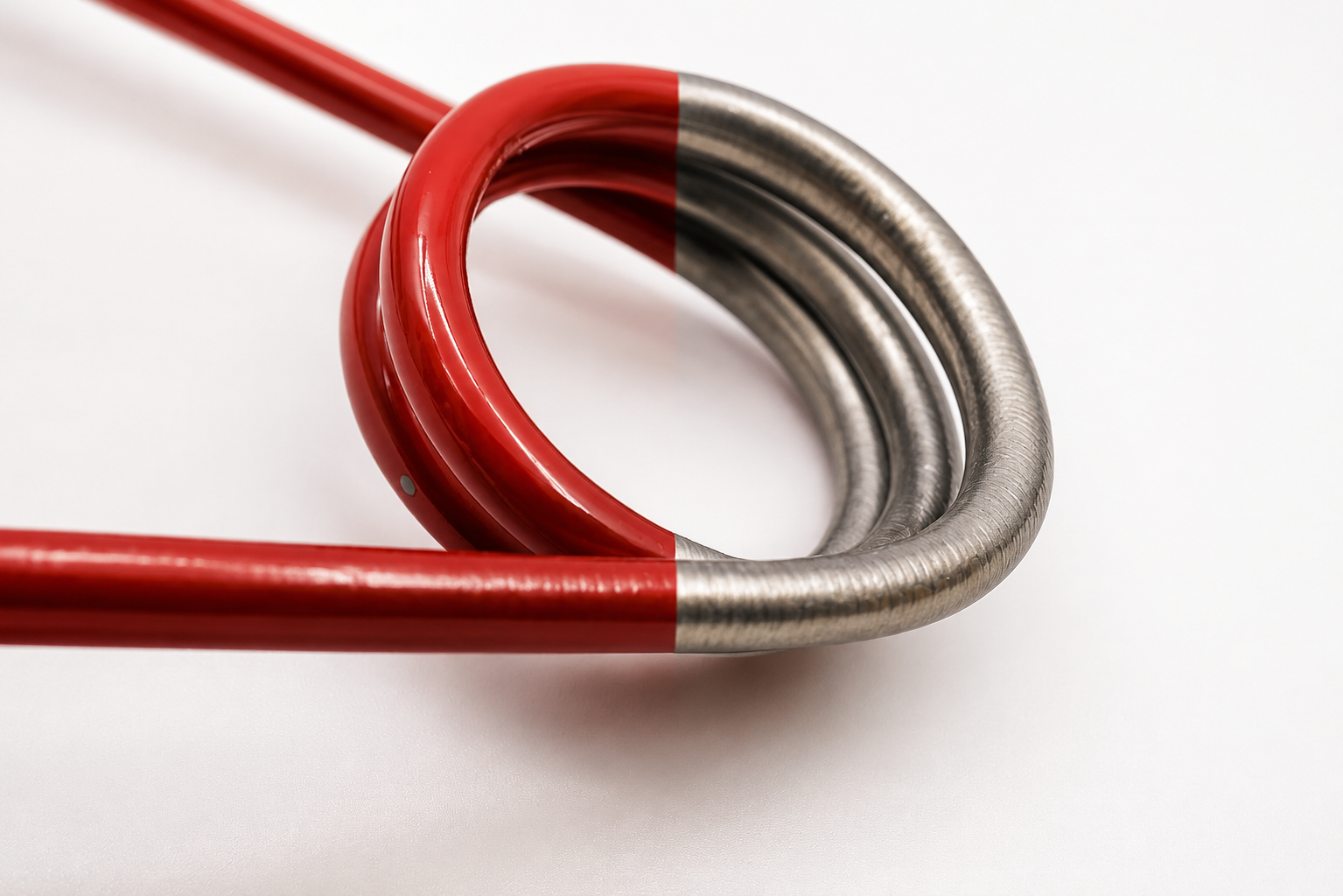
Why Is Laser Cleaning Ideal for Paint Shop Jig Maintenance?
Material-Friendly, Life-Extending Technology
Non-Destructive Cleaning
- No warping
- No material wear
- No surface burning
- No loss of dimensional accuracy
Consumable-Free Operation
No blasting media, no combustion residues, no acids and no hazardous waste. Laser cleaning enables a cleaner, lower-cost maintenance process.
Reliable Fixture Performance
- Stable part holding
- Proper electrical contact
- Significantly reduced paint defects and scrap
Automatable Process – Cleaning as Part of the Production Flow
Jigs can be cleaned directly within the production process, for example after empty hangers return on the conveyor between painting cycles.
Download Technical Information
Please enter your company contact details to access the technical documentation.
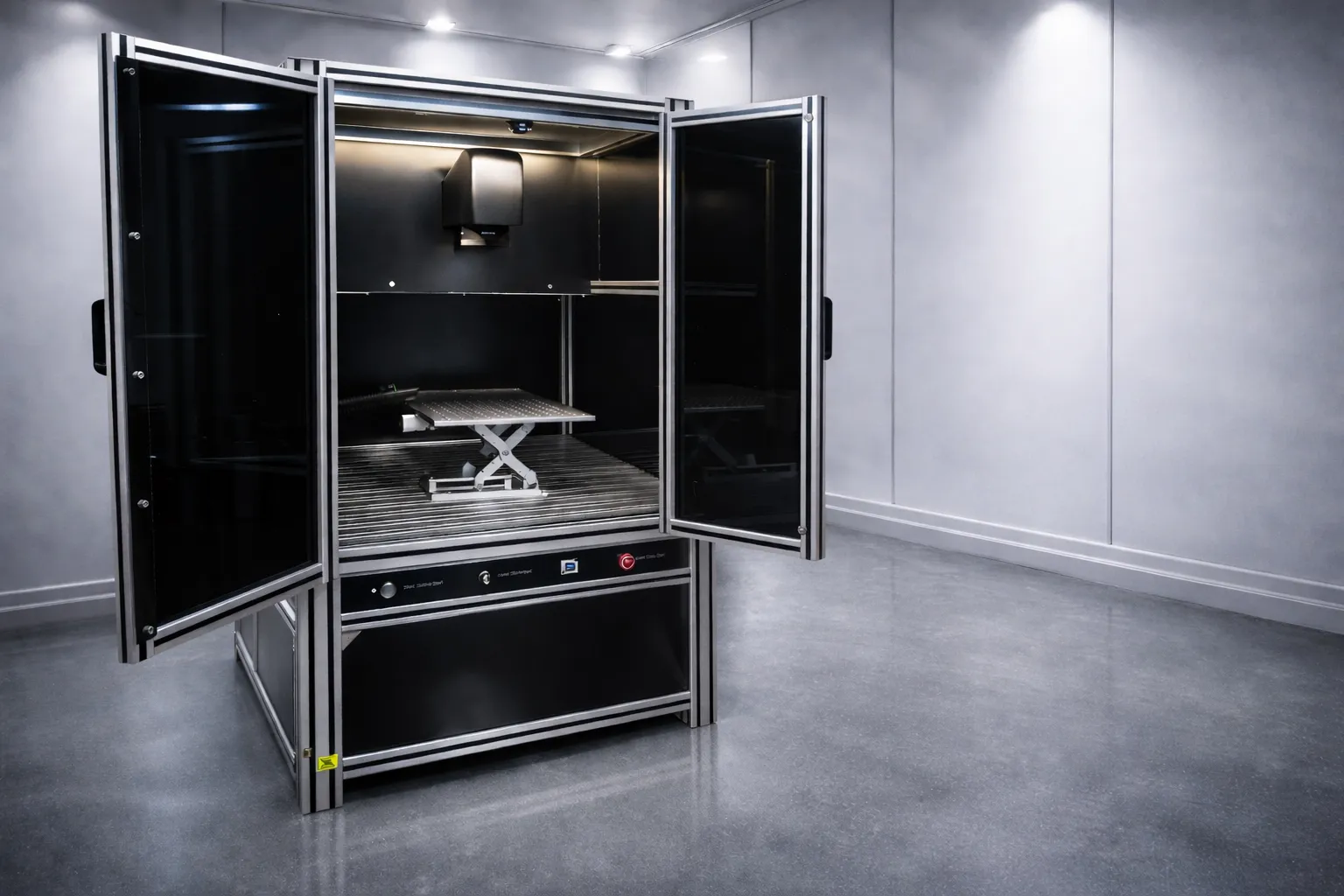
Automated Jig Cleaning Integrated into the Paint Line
Fibeer SX offers fully automated laser cleaning cells that operate directly inside the paint line without interrupting production.
Automatic Transport
A robot arm or conveyor transfers contaminated jigs directly to the laser cleaning station.
Vision Inspection
An integrated camera system identifies the contaminated cleaning areas automatically.
Laser Recipe Execution
Predefined cleaning programs ensure repeatable, accurate and process-safe results.
Immediate Return
The cleaned jig is returned to the production line within seconds for the next painting cycle.
The fully automated workflow minimizes operator intervention, maintains stable production quality and enables reliable 24/7 operation with consistent cleaning performance.
Download Technical Information
Please enter your company contact details to access the technical documentation.
1D Laser Cleaner – Flexible Solution for Jigs
The Fibeer SX 1D laser cleaning system can be configured for manual maintenance, robotic automation or direct integration into the paint line.
Handheld Operation
The system can be used with a handheld cleaning gun for fast and flexible maintenance tasks.
Robot Integration
The laser head can be mounted on a robot arm for immediate and repeatable automation.
Paint Line Installation
The system can be installed directly on the production line to clean jigs after each cycle.
Digital Connectivity
Integration is possible with PLC, MES and conveyor systems for coordinated production control.
Where the 1D System Delivers the Greatest Benefit
The solution is especially effective in high-throughput environments where fixture cleanliness directly influences paint quality, electrical contact and maintenance efficiency.
High Jig Circulation
Ideal where a large number of jigs and hangers continuously move through production.
Rapid Contamination
Suitable for applications where paint, lacquer and process residue build up quickly.
Critical Surface Quality
Supports stable part holding, clean electrical contact and consistent coating quality.
Reduced Manual Work
Helps minimize repetitive cleaning tasks and shorten maintenance cycles.
Why Is Laser Jig Cleaning Worth It?
The technology can be applied across paint shop industries including automotive, electronics, furniture, household appliances and agricultural machinery.